

December 2, 2011

Run for your Rivers

5562_PRNET_IL_Marathon_Masthead_Web_4Review2

If you’ve ever thought about participating in one of the Illinois Marathon races (5K, 10K, half or full marathon, or 5K walk), 2012 is your year!

Prairie Rivers Network is fielding a charity running team. Just sign up through our website and raise money on behalf of Illinois’ rivers and streams.

Whatever your level, there is a race for you. Ask a friend to join you in your race and help protect clean water while having fun at the same time.

Benefits of Running for Prairie Rivers Network

  • Supporting a cause you believe in – donations that you bring in from the friends, family, and co-workers that sponsor you will go directly to supporting our Clean Water Act enforcement work
  • Guaranteed lowest race registration fee when you register here
  • Team Tech T-shirt and Prairie Rivers Network hat
  • Rain barrel awarded to biggest fundraiser

We need your help.
Sign Up TODAY and run for your rivers!


Donate-Button

November 18, 2011

Stacy James wins 2011 Champaign STAR award

Congratulations to Prairie Rivers Network Water Resources Scientist Stacy James on being recognized by the City of Champaign for her work helping city residents learn about and install rain gardens. She was presented her award in May at the City’s awards banquet.

SJames 2011 STAR awardChampaign’s Service Together Achieves Results program was created to recognize and acknowledge unsung heroes who are working to make the community a better place to live.

Stacy was recognized in the Neighborhood – Community Building category. This award recognizes excellence in community building within a neighborhood. Neighborhood-community building projects are activities that are initiated by any individual or group to improve the physical or social environment of a neighborhood.

In 2010, Stacy worked with residents of Champaign’s John Street and Washington Street neighborhoods to install several rain gardens. Both of these neighborhoods suffer from flooding problems. By working together to build rain gardens at sites selected by neighborhood residents, people learned firsthand how to create rain gardens in their own yards – these will benefit individual homeowners and the neighborhood overall.

Rain gardens are landscaping features that help capture rainwater and snowmelt, allowing it to soak into the ground rather than running off into storm sewers. This provides two big advantages to homeowners and local waterways:

1) Soil can absorb and break down water pollution such as lawn chemicals, pet waste, and motor oil and other chemicals that leak onto driveways from cars. The more water that percolates through soil before reaching groundwater and streams, the less water pollution there is.

2) Rainwater and snowmelt that run straight into storm drains go directly into local streams in a quick burst – this causes erosion and flooding problems downstream. Capturing and slowing down this water allows streams have more natural flows and less flooding and erosion

For information about how to create a rain garden, see Prairie Rivers Network’s rain garden brochure.

November 9, 2011

Action Alert: National Coal Ash Call-In Day

CALL TODAY – November 9, 2011

Our last hope for EPA to protect us from coal ash pollution lies in our U.S. Senators hands.

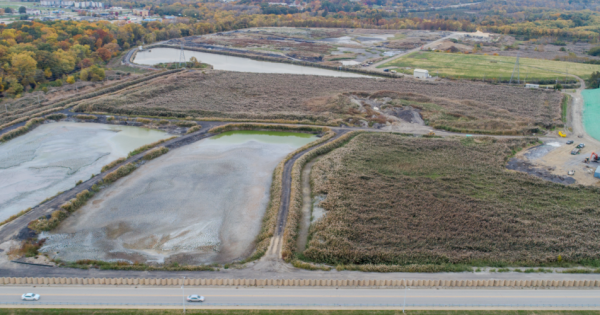
Coal Ash Pond, Havana, IL

Coal Ash Pond, Havana, IL

Coal ash is contaminating our groundwater because it is not disposed of safely. In fact, Illinois has more cases of contaminated groundwater from coal ash than any other state.

Call Senators Durbin and Kirk and tell them to vote NO on S. 1751!

Senator Richard J. Durbin 202/224-2152
Senator Mark Kirk 202/224-2854

Talking points include:

  • S.1751 endangers the health and safety of thousands of communities: it will prevent the EPA from ever revisiting a federal coal ash rule even if it is found that coal ash dumps pose an even greater threat.
  • S.1751 is a dangerous bill: it would allow the construction of coal ash dumps that don’t meet drinking water standards for arsenic, lead and other pollutants.
  • S.1751 will cost American jobs: A recent study by a Tufts University senior economist found that strong coal ash regulations, such as the one proposed by the EPA in 2010, would generate 28,000 jobs annually.
  • S.1751 will hurt recycling: once coal ash is dumped into water, which this bill would allow by permitting the construction of new coal ash ponds, it cannot be recycled.
  • S.1751 fails to address the current threat: this bill will not phase out dangerous ash ponds or prevent another tragedy like the coal ash spill in Tennessee in 2008.
  • Coal ash is hazardous to our health: the cancer risk from drinking water contaminated by arsenic near some coal ash ponds is 1 in 50, which is 2,000 times greater than the EPA’s acceptable risk level
  • Coal ash is a national problem: it is the second largest industrial waste stream in the U.S.

You can find more information about S.1751 here

You can read more about Prairie Rivers Network’s work on coal ash here.

November 7, 2011

Public Hearing: Close Dynegy’s High Hazard Coal Ash Dumps in Havana!

Ask Illinois EPA and Dynegy’s Havana Power Plant for responsible coal ash disposal and closure of high hazard ash ponds.

The Illinois Environmental Protection Agency has tentatively decided to reissue a permit to Dynegy’s Havana Power Plant that would allow additional mercury and other harmful pollution found in coal ash to be discharged into the Illinois River. Dynegy wants to continue dumping its coal ash in a 96-acre wet impoundment that is upland of the town of Havana, instead of converting to a safer dry landfill as other Illinois power plants have done.

The Havana coal ash pond is larger than the ash impoundment that failed in 2008 at the TVA’s Kingston Fossil Plant sending over 1 billion gallons of coal ash slurry into the Clinch and Emory Rivers.

If you are concerned about water pollution, healthy fish, and threats to public health and safety, please attend the Public Hearing:

Tuesday November 8, 2011 6 p.m.

Occasions Banquet Facility, 301 West Main Street, Havana, Illinois

Tell Illinois EPA and Dynegy:

  • Thank you for new air pollution control equipment ‐ we don’t want to breathe dirty air!
  • Now, take that pollution and dispose of it responsibly. No coal ash toxins in our river!
  • We use and enjoy the river where water from the coal ash ponds is being dumped. We eat the fish, we draw our income from the river, we recreate on the river. Keep our Illinois River clean!
  • Invest your earnings in pollution control. Build a safe, lined landfill.
  • We live downhill from the ash pond storing nearly 1 billion gallons of hazardous coal ash.
  • We are threatened by the coal ash pond ‐ inspect it, fix it, then close it down!

View flyer for more information.

If you cannot attend the hearing, please email your comments urging the closure of the Havana ash pond to IEPA Hearing Officer Dean Studer at <Dean.Studer@illinois.gov> and specify Havana Power Station NPDES in subject line by midnight, December 8, 2011. Comments postmarked by December 8th, 2011 may be sent to:

Hearing Officer Dean Studer
Re: Havana Power Station NPDES
Illinois Environmental Protection Agency
1021 North Grand Avenue East
P. O. Box 19276
Springfield, IL 62794-9276

November 7, 2011

Sing it! We all live in a Wa-ter-shed, a Wa-ter-shed, a Wa-ter-shed…

Whether “watershed planning” is a foreign concept to you, or you have been actively preserving the health of Illinois watersheds for years, we guarantee that you will discover something new on our For Watershed Groups webpages.

What is a watershed?  What is meant by watershed planning?  Browse through Watersheds 101 to find out.

Watershed Diagram Courtesy of Arkansas Watershed Advisory Groups

Watershed Diagram Courtesy of Arkansas Watershed Advisory Groups

What do watershed groups do? Visit Illinois Watershed Groups for links to some of the most active groups in our state.

Tools, Manuals, Websites, and Maps will get you well on your way to taking an active role in protecting your watershed. Do you know which watershed you live in?  Is there a watershed group in your area?  Find out through on-line databases.

Are you already active in your watershed?  Download free tools and manuals that will assist you at all levels.

Would you like to get involved? Visit Partners and Volunteer Networks for links to groups like Illinois RiverWatch Network and the Volunteer Lake Monitoring Program.

View presentations from our Workshops on Watershed Capacity Building.

Learn tips on grant writing to receive funding for your projects. Get advice on conducting outreach campaigns.  Follow step-by-step tutorials to find free on-line data. Read our Final Report to learn more about how Prairie Rivers Network has supported watershed groups.

Remember: we all live in a watershed; we all have a direct impact on the health of our rivers; and there are tools available to help each of us make a difference!

November 3, 2011

Another preventable coal ash disaster!

Just two weeks after the House of Representatives caved to the coal industry and voted to strip the EPA of the authority to protect Americans from coal ash, a retaining bluff collapsed on Monday, October 31, at the We Energies Oak Creek Power Plant in Wisconsin, sending toxic coal ash spewing into Lake Michigan, a drinking water supply for over 10 million residents in Wisconsin, Illinois and Indiana.

The standard line from opponents of strong EPA regulation of toxic coal ash is: “States can handle this.”  But state environmental regulators gave We Energies a pass in 2008 – exempting it from certain rules so that construction work could be done atop coal ash landfills on a bluff on the Lake Michigan shoreline at the utility’s Oak Creek Power Plant, officials said Tuesday.  A recent review conducted by Earthjustice reveals that when measured against basic safeguards that the U.S. Environmental Protection Agency (EPA) identified as essential to protect health and the environment, state regulatory programs fail miserably to guarantee safety from contamination and catastrophe.  Our recent report, Illinois at Risk,” highlights numerous examples of how our state environment regulators are failing to protect residents from coal ash pollution in Illinois.

Our last hope for EPA to protect us from coal ash pollution lies in our U.S. Senators hands.

Tell your Senator to support the EPA’s efforts to give us strong safeguards on coal ash!