Topic: Coal

May 10, 2012

Proposed Coal Mine Raises Questions About Drinking Water and Salt Fork River

 FOR IMMEDIATE RELEASE

5.10.2012

Stakeholders and Residents Invited to Public Meeting May 23rd, 7:00 pm at Homer Lake’s Salt Fork Center to Discuss Concerns

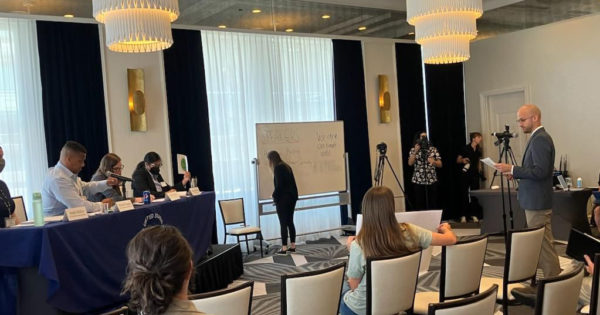
Homer, IL – Representatives of Champaign and Vermilion county residents, including stakeholders along the Salt Fork of the Vermilion River, held a press conference today to highlight questions that have been raised in response to media reports that the Village of Homer is negotiating a deal with an out of state coal company to provide water for a proposed coal mine.

Questions have been swirling since media reports surfaced last month suggesting that Sunrise Coal of Terre Haute, Indiana is seeking a deal to purchase water for use in coal processing from the Village of Homer – including water from its drinking water wells near Ogden, or  from the Salt Fork River.

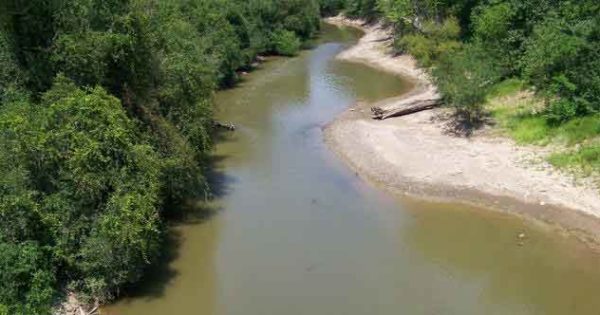
“The Salt Fork is a beautiful natural resource in the backyard of our community.  It is a rich and diverse sanctuary for wildlife,” explained Sue Smith, local farmer and Salt Fork resident. “Our family has grown up along this river system for generations, appreciating and enjoying its natural beauty.  We canoe, kayak, hunt, fish, and bird watch in and along its banks from the Saline Branch at Crystal Lake Park in Urbana to the Vermilion River in Danville.”

Speakers also raised concerns about the mine’s proposal to discharge mine wastewater into Olive Branch, which is a tributary of the Salt Fork River.  This has the potential for adding sediments and pollutants such as heavy metals and salts into waters now used for drinking water supplies, fish and wildlife habitat, recreation and livestock watering.

“In the last three years, one-third of Illinois coal mines have been out of compliance with their water discharge permit for over one year or more, so there is serious concern that if this coal mine is approved, the Olive Branch and Salt Fork will bear the burden of increased coal mine pollutants, including chlorides and sulfates as well as heavy metals such as arsenic, lead, mercury and selenium”, explained Traci Barkley, Water Resource Scientist with Prairie Rivers Network. Prairie Rivers Network is a statewide nonprofit that advocates for the protection of Illinois’ rivers and streams.

“We must be able to protect our communities and our resource base.  We need transparency based on timely and accurate information from the officials we’ve chosen to serve us and from companies that want to do business here,” said Charles Goodall, a Vermilion County farmer and landowner. “We must put behind us the days when we are ambushed by mining companies.”

To address these concerns, the speakers announced a that public informational meeting hosted by Prairie Rivers Network will be held on Wednesday, May 23rd, 2012 at 7:00 pm at the Salt Fork Center at Homer Lake.

“We urge the village leadership as well as all our local stakeholders and decision makers  to seek full disclosure of the risks, and seek guarantees to maintain and enhance the quality of our lives in our community,” said Peter Kuchinke, a Salt Fork landowner and resident.

Local residents, farmers, landowners,  anglers, paddlers are invited to discuss concerns they have about the implications these proposals may have on drinking water availability, as well as the lasting ecological health of the Salt Fork River. The goal is to have an open and transparent discussion, voice shared concerns, and obtain answers to questions to protect the Salt Fork River, as well as a sustainable future for our rural Champaign and Vermilion County communities.


May 3, 2012

Press release: Illinois Taxpayers Foot the Bill for Biased Coal Curriculum in Schools

5.3.2012

For Immediate Release

Statewide Alliance Calls for End to Subsidies and Misinformation

Springfield – Supporters of the Heartland Coalfield Alliance, a statewide coalition of community and environmental organizations, held a rally outside the Illinois Department of Commerce and Economic Opportunity (DCEO) today, calling on the Department to stop what the group calls a waste of taxpayer funds and a publicly financed marketing campaign for the coal industry that targets children.

The DCEO currently produces and distributes a school curriculum for elementary and high school students entitled “From the Coal Mines to the Power Lines,” with the expressed purpose of providing students with a “sound and meaningful understanding of coal in Illinois.” Opponents of the program point out that the curriculum makes little mention of coal’s liabilities, of the environmental damage caused by its mining, burning or waste disposal, nor of its documented effects on public health.

“In hundreds of pages, DCEO’s curriculum fails to mention coal’s devastating impacts on clean water in Illinois, including massive habitat destruction from coal mines, harmful pollution in mine wastewater, and leaking coal ash dumps at power plants that is polluting rivers, streams and groundwater across the state ” said Brian Perbix, Grassroots Organizer with Prairie Rivers Network. “Illinois’ communities have borne the burden of coal pollution for far too long – our kids deserve to hear the truth.” {Continue Reading »}

April 11, 2012

Help Protect the Shawnee National Forest from a Strip Mine

By Brian Perbix

THE U.S. FOREST SERVICE NEEDS TO HEAR FROM YOU

Local residents and river enthusiasts from across the country recently spoke up for the Shawnee National Forest by submitting thousands of comments urging the Forest Service not to let Peabody Coal turn part of the Shawnee National Forest in southern Illinois into a strip mine. According to the Shawnee Forest Plan, the guiding land use planning document for the Shawnee National Forest: “Lands adjacent to streams and rivers are rich in biological diversity and especially important for recreation and wildlife.”

Perhaps that’s why everyone was so surprised last December when the U.S. Forest Service announced it was considering a proposed land swap with a subsidiary of Peabody along the Saline River in Gallatin County, IL that would turn Shawnee National Forest land into a strip mine.

The 384 acres of Forest Service land Peadbody wants to strip mine includes over 50 acres of wetlands, and has high quality mature forests that are home to federally endangered Indiana and Gray Bats. Furthermore, the Illinois Natural History Survey has for the first time discovered that the Saline River system is home to the endangered Fat Pocketbook mussel. Strip mining this unique natural area would destroy this crucial habitat and reduce water quality in the Saline River, posing a threat not just to wildlife, but also to the local residents who rely on clean and healthy rivers for hunting, fishing and recreation.

Now that the initial comment period is over, the Forest Service will begin the preparation of an Environmental Impact Statement.

How can you help?

Sign our petition.

There is still time to tell the Forest Service to stop the swap, and make sure this gem of the Shawnee Forest remains protected forever. The future health of the Saline River system is truly at stake, and we must act to protect high quality habitat along rivers to ensure clean water and healthy communities for generations to come.


April 5, 2012

Prairie Rivers Network & Community Groups File Lawsuit for Federal Coal Ash Protections

Coal Ash Dump in Joliet, IL

Today Prairie Rivers Network joined with national partners, Earthjustice, Environmental Integrity Project, Physicians for Social Responsibility and other state-based environmental protection organizations in filing a lawsuit to finalize national standards for coal ash disposal.

This is critical for Illinois because while our state generates 4.4 million tons of coal ash every year, and imports coal ash for disposal from at least 6 states, this harmful waste product is handled according to outdated and ineffective state rules that were written over three decades ago. We are long overdue for an update, as evidenced by the fact that groundwater contamination from coal ash pollution has been found at every site investigated in Illinois – that’s 22 out of the 24 coal plants in the state. Below is a joint press release issued with our partners describing why now is the time for the Environmental Protection Agency to finalize its decision on coal ash. {Continue Reading »}

January 20, 2012

Press Release: Delayed Coal Ash Protections Put Public Health at Risk

PRESS RELEASE ISSUED: January 18, 2012

Contacts:

Sandra Diaz, Appalachian Voices
Diana Dascalu-Joffe, Chesapeake Climate Action Network
Jared Saylor, Earthjustice
Eric Schaeffer, Environmental Integrity Project
Hartwell Carson, French Broad Riverkeeper
Mary Love, Kentuckians For The Commonwealth
Anne Hedges, Montana Environmental Information Center
Barb Gottlieb, Physicians for Social Responsibility
Traci Barkley, Prairie Rivers Network
Sean Sarah, Sierra Club
Aaron Sarver, Southern Alliance for Clean Energy

Groups head to court to force issuance of important national safeguards

Washington, D.C. – Environmental and public health groups announced their intent to sue the U.S. Environmental Protection Agency in federal court to force the release of long awaited public health safeguards against toxic coal ash. The EPA has delayed the first-ever federal protections for coal ash for nearly two years despite more evidence of leaking ponds, poisoned groundwater supplies and threats to public health.

Earthjustice, on behalf of Appalachian Voices (NC), Chesapeake Climate Action Network (MD), Environmental Integrity Project, French Broad Riverkeeper (NC), Kentuckians For The Commonwealth (KY), Montana Environmental Information center (MT), Physicians for Social Responsibility, Prairie Rivers Network (IL), Sierra Club and Southern Alliance for Clean Energy (TN), sent the EPA a notice of intent to sue the agency under the Resource Conservation and Recovery Act (RCRA). The law requires the EPA to ensure that safeguards are regularly updated to address threats posed by wastes. However, the EPA has never undertaken any action to ensure safeguards address the known threats posed by coal ash, a toxic mix of arsenic, lead, hexavalent chromium, mercury, selenium, cadmium and other dangerous pollutants that result from burning coal at coal-fired power plants.

A copy of the Notice of Intent to Sue letter sent to the EPA is available at: http://earthjustice.org/sites/default/files/NOI_RCRA_1_18_12.pdf

Following a spill of more than a billion gallons of coal ash at a disposal pond in Harriman, TN, in December 2008, EPA Administrator Lisa Jackson announced in 2009 plans to set federal coal ash regulations by year’s end. In May 2010, the EPA proposed a hybrid regulation to classify coal ash either as hazardous or non-hazardous waste. After eight public hearings across the country and more than 450,000 public comments, the agency decided to delay finalizing the rule amid intense pressure from the coal and power industries.

Despite numerous studies showing the inadequacy of current federal coal ash safeguards to protect public health and the environment as well as documented evidence by the EPA and environmental groups showing coal ash poisoned aquifers and surface waters at 150 sites in 36 states, the EPA continues to fail to adopt federal safeguards. Today’s lawsuit would force the EPA to set deadlines for review and revision of relevant solid and hazardous waste regulations to address coal ash, as well as the much needed and overdue changes to the test that determines whether a waste is hazardous under RCRA. {Continue Reading »}

December 6, 2011

Proposed New Strip Mine Threatens Drinking Water

Illinois EPA Proposes to Allow Serial Polluter to Operate New Coal Strip Mine Upstream of Canton Lake

Help residents protect their drinking water and ask state regulators to do their jobs – sign the petition now!

North Canton Mine Proximity to Canton Lake and Copperas Creek Thumb

Residents in Canton are worried about their drinking water. Unfortunately, they have good reason to be. Canton Lake, Copperas Creek, and the people who rely on them are under threat from a proposed 1,000-acre strip mine a mile upstream of Canton Lake.

Over 20,000 people rely on Canton Lake for their drinking water and have taken great lengths to protect this precious resource over the years. For many residents and others who travel to the region, this is an area valued for hunting along and fishing in Copperas Creek, the source for Canton Lake.

Any strip mine would be cause for concern; strip mining coal strips the land of trees and vegetation, regrades the land affecting drainage patterns, and creates water pollution. This would be bad for drinking water. But in this case, there is even more cause for concern. The operator of the mining company behind the proposal for the North Canton Mine (Capitol Resources Development Company) is the same operator for the company (Springfield Coal Company) that runs the Industry Mine. Springfield Coal Company is being sued by Illinois Attorney General Lisa Madigan because the Industry Mine’s environmental compliance record is one of the worst for coal mines in Illinois. The case was originally brought by Prairie Rivers Network and the Illinois Chapter of the Sierra Club in 2009 due to the mine’s continuous violations of its current water permit dating back at least to 2004 and with over 300 Clean Water Act Violations in the past six years. {Continue Reading »}