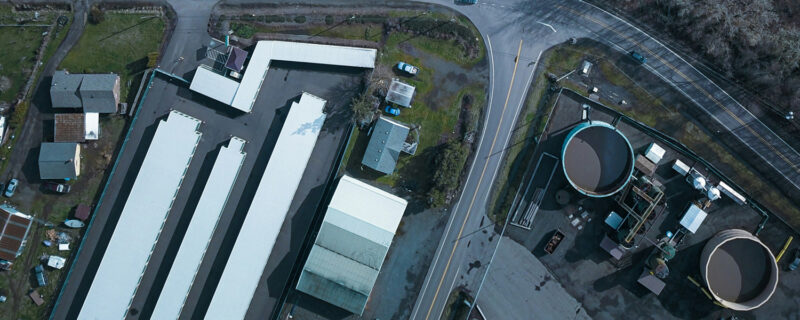
Over the past six months, communities across Illinois have been caught off guard by sudden proposals—often from major tech companies—to build enormous data centers nearby. These projects promise jobs and innovation, but come with huge demands for land, electricity, and water. Data centers aren’t new, but the speed and scale of this new construction wave are. What changed?
How We Got Here
Data centers house computer infrastructure, and have existed in some form for decades. Their size—and numbers—have expanded over time, almost without our noticing, to accommodate new technologies. They power much of our daily life: internet searches, cloud storage, streaming, and social media. But, until recently, most people rarely heard about them.
That changed in 2022 with the release of OpenAI’s ChatGPT, a free generative artificial intelligence (AI) tool. The launch triggered an AI “gold rush” that promised revolutionary technological advances, but said little about the resources needed to make them run.
Three years later, generative AI is embedded in nearly every facet of our digital lives. And as it turns out, the “revolution” no one really asked for requires vast amounts of land, water, and electricity in a time of stretched resources.
Draining Important Resources
Data centers are enormous consumers of electricity and water. Each one can cover hundreds of acres, drawing large amounts of electricity to power and cool thousands of servers running nonstop. Keeping those machines from overheating during 24/7 operations requires constant cooling. There are several ways to cool data center equipment, but all tradeoffs between energy and water usage: If less energy is used for cooling, more water will be required. No matter what, the environmental footprint is big.
Data centers are also getting bigger. A 100 megawatt data center used to be at the high end of resource use; there are now proposals for 1000MW data centers. A data center currently proposed in Sangamon County would use 600MW of electricity; for context, that amount of electricity would power hundreds of thousands of homes. Bigger data centers mean increased water use as well.
Communities Pay the Price
For local residents, there’s a risk that these projects bring more costs than benefits. On the electric side, data centers pass many of their costs on to ratepayers. The Union of Concerned Scientists found that the public is paying $4.3 billion to support data centers across seven states–mostly through higher energy prices and grid upgrades needed to keep up with their massive, around-the-clock demand.
Water is no better. Illinois has no enforceable statewide system to track large water users, meaning communities might not find out about major withdrawals from public water supplies until after the fact. Without oversight, a single private company’s cooling needs can reshape public water systems, leaving local residents and ecosystems to deal with the consequences.
What Lies Ahead
Illinois must get ahead of this wave. Comprehensive policy reform is needed to ensure development is sustainable and fair. PRN supports policies that would:
- Require transparency: All large industrial and commercial water users should track and report their water use.
- Hold companies accountable: Data centers should pay for new, clean energy to offset their electricity demand and grid upgrades.
- Strengthen permitting: Local and state permitting should include clear, science-based sustainability criteria such as water-use limits, air pollution controls, and energy efficiency.
- Enforce the rules: Establish real penalties for facilities that fail to meet these standards.
PRN is committed to meeting this challenge, but we need your help. In 2026, we’ll be expanding our research, advocacy, and public outreach to ensure the next generation of industry in Illinois uses resources responsibly. Before we allow tech billionaires to call all the shots, inevitably straining our power grid, draining our water reserves, and encroaching on our communities, we must ask ourselves:
Is this the future we want to prioritize?
We have a choice. Your support of PRN today will help us scale our efforts to demand a better path forward.