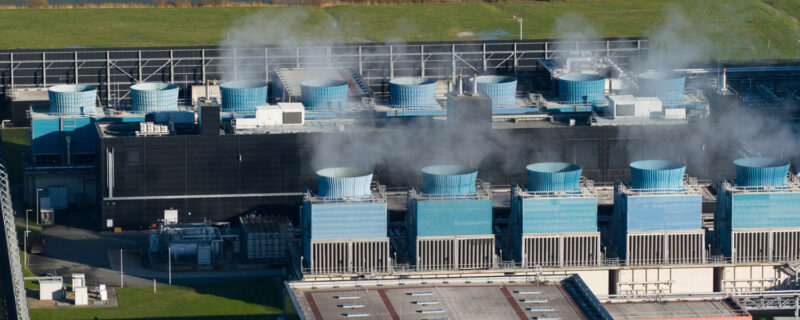
“Data centers” is a common name for buildings used to store the computer infrastructure required for internet searches, cloud storage, streaming, and even social media posts. Data centers themselves are not new, but their proliferation has been accelerated by the demands of emerging technologies such as OpenAI’s ChatGPT. As generative AI becomes securely embedded in our digital lives, the number and size of these data centers are exploding to keep up with digital demand. Communities across Illinois are now grappling with the implications of a data center on their doorstep. Without guardrails, these technologies could have devastating impacts on local land, water, and electricity.
The Resilient Communities Webinar Series has created space for people to hear perspectives from water and energy experts, utility companies, and affected communities to ensure residents and leaders can make informed decisions about local data center developments. This three-part series, Watt’s Up With Data Centers?, accommodates the wide breadth of concerns and questions related to these projects. Learn more about each webinar by reading our recap blog posts and/or watching the recordings.
- Part I: “Understanding Energy and Water Use” (Blog post below | watch the recording)
- Part II: “Community and Utility Perspectives” (Blog post | watch the recording)
- Part III: “Community Strategies for Responding to Data Center Development” (Blog post | watch the recording)
Understanding Energy and Water Use—and What Communities Can Do
Part I of the Watt’s Up with Data Centers series, “Understanding Energy and Water Use”, was recorded on January 13, 2026, covering water and energy use concerns about large scale data center projects. Speakers included experts from the University of Illinois, RMI, and the Alliance for the Great Lakes.
Dr. Yu-Feng Lin, adjunct professor in the Department of Civil and Environmental Engineering at the University of Illinois, discussed data centers through a lens of metrics called a sustainability triangle, describing the delicate balance between water use, power use, and carbon emissions, and noting that the reduction of one would lead to the increased use of another. These metrics help provide a holistic view of a data center’s environmental footprint, and by understanding how the three metrics relate, data center sustainability can be improved.
Steve Abbott, Principal at RMI, walked participants through energy-related challenges for communities to consider, such as increased utility costs, financial exposure from overbuilding, and degraded grid reliability. He shared historical examples showing how communities can be impacted when the demand for these projects does not materialize, as what happened in 2001’s dot com boom.
Helena Volzer, Senior Source Water Policy Manager at the Alliance for the Great Lakes, wrapped up the webinar with a high level overview of her recent report, A Finite Resource: Managing the Growing Water Needs of Data Centers, Critical Minerals Mining, and Agriculture in the Great Lakes Region. She broke down why it is so important to understand the direct and indirect water use of these hyperscale data centers, even when they are using closed loop systems. All speakers shared the importance of early community organizing, specific questions to ask developers, and the need for state policy to mitigate the worst of these potential impacts.
Data Centers, Illinois Communities, and Prairie Rivers Network
Data centers already dot the Illinois landscape, and many more are in development. They pose unique challenges to our electric grid, our water supply, and the well-being of our communities. Their demand for power threatens our progress toward clean and affordable energy, and has already put significant pressure on our utility bills. Illinois’ water supplies are already stressed, so allowing data centers to consume massive amounts of water without proper oversight is dangerous.
Policy action in this area is critical. Prairie Rivers Network’s water and energy teams are responding by organizing to support state policy solutions. Alongside our partners in the Illinois Clean Jobs Coalition, PRN will support policies that ensure a) data centers are accountable for their water, health, and climate impacts, and b) their massive infrastructure costs are not shifted to the public. Now is the time to ensure that data centers pay their own way, protect communities, and operate within Illinois’ climate and water limits.