
Have you ever been scrolling through Facebook or watching TV only to see a news headline or a post about new research making some grand claim? Maybe it’s a post about solar panels or pesticides or data centers that makes you question what you thought you knew, or how safe or dangerous those things may actually be. Either way, there is a good chance that you could have been seeing a form of mis- or disinformation.
Caring About the Earth = Fishing Through False Information
False information is rampant within environmental spaces. Multiple factors contribute to this.
Environmental activists and the policies we often advocate for tend to question pre-existing power structures. For example, asking the question “Should corporations pay for damage to the environment if their operations caused harm?”, or requiring regulations of pollutants created during the manufacturing process, place more responsibility on the corporation. This accountability may result in economic implications for their business. Corporations don’t usually view the positive results of a healthy environment as beneficial to their business model.
Activists also question societal structures that emphasize short-term growth over safeguarding the environment and resources for future generations. This article talks more about why this is controversial.
With this controversy and attacks on pre-existing power structures comes intentional campaigns to discredit research in the environmental sphere. In a research report by the Union of Concerned Scientists in 2007, a decades-long ExxonMobil campaign to discredit climate science was found to use tactics similar to those used by Big Tobacco to convince people that smoking wasn’t actually all that bad. The Koch family, which owns an oil-focused business conglomerate, has funded multiple think tanks that spread false or misleading claims about environmental issues. This intentional spread of false information is much different than when your Facebook friends, meaning well, unwittingly share a post containing false information.
What’s The Difference?
Misinformation
As mentioned above, misinformation is information that is false or inaccurate. It is an umbrella term used to defined incorrect information that is typically spread by well-meaning individuals but is not limited to that.
For Example…
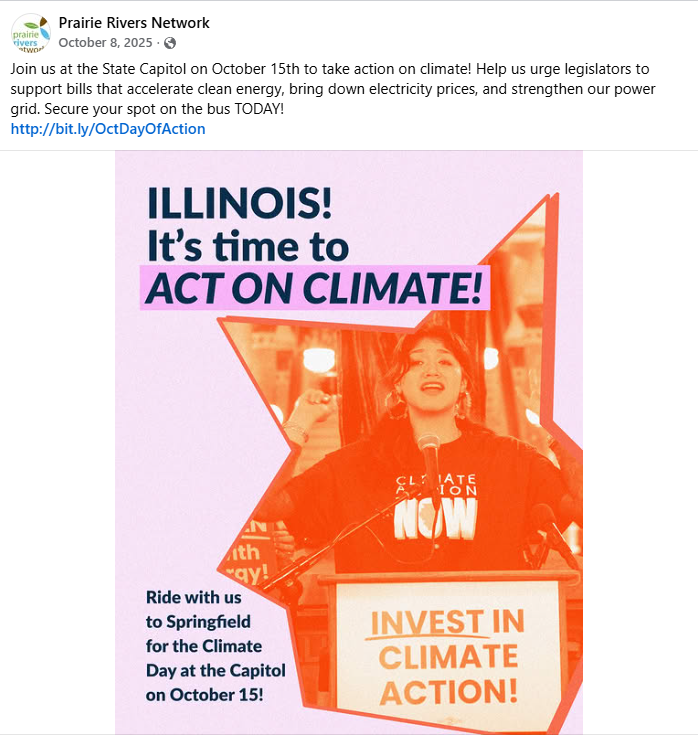
PRN often sees misinformation being spread in the comment sections of our social posts. This post has multiple comments featuring misinformation.
One example is a graphic that a commenter left on the above post. It features a cowboy, smoking a cigarette while riding a horse with the text “When, exactly, in earth’s history did the climate not change?”. The graphic not only disregards evidence about climate change being human-caused and creates skepticism around the need for climate action, it was also posted as if these changes are normal and therefore fine. This user most likely believes this to be true, which is how misinformation grabs hold and gains traction.
Disinformation
On the other hand, disinformation is misinformation intentionally shared to mislead those consuming it. This includes intentionally misstating facts, leaving out data from studies, or cherry-picking information that fits a particular narrative.
For Example…
One example of disinformation is Big Oil’s popularization of the personal carbon footprint. This article looks at how British Petroleum emphasized personal choice through the reduction of individuals’ carbon footprint rather than taking corporate responsibility for the planetary harm. WBUR, Boston’s NPR station, also highlighted this disinformation campaign in an interview. Below is a quote that summarizes these campaigns well and explores how they are used in multiple industries.
“We have to see BP as part of a lineage of industrial producers of harmful commodities that have, for decades, used personal responsibility framings to disavow themselves. Regardless of the extent to which we have the strategy memos to substantiate that internal goal, that is the end effect… it’s been well-documented that everything from tobacco to junk food to lead, cars, alcohol, the gun lobby, they’ve all emphasized consumer responsibility and downplayed corporate responsibility in their public affairs and often litigation.”
– Geoffrey Supran, How Big Oil helped push the idea of a ‘carbon footprint’
Why is Misinformation Dangerous?
Misinformation causes harm in myriad ways. It can:
- Erode trust in reliable institutions, such as scientific research institutes or public health organizations.
- Create polarization, making it hard to reach a common understanding or find solutions to complex problems affecting public policy creation and people’s lives.
- Encourage emotional detachment and lower levels of empathy for others, undermining collective action and society’s ability to take care of each other.
The World Economic Forum’s Global Risk Report lists mis- and disinformation in the top 10 perceived global risks due to the reasons listed above.
Misinformation has always been difficult to manage, but never more so than in the current digital age, where it often takes hold well before experts are even aware of it, much less have a chance to address it. This is only exacerbated by the use of generative artificial intelligence (AI) to create “deep fakes”—pictures, videos, or recordings that alter original images and voices to impersonate a trusted voice on a topic, deliberately spreading false information. Disinformation campaigns can also hijack our brains, pulling on psychology principles to use our biases against us. The University of Michigan highlights some of these biases in this research guide.
Tools for Fighting Back
The first step in combating false information is recognizing it. Here are a few resources to help you learn how to spot misinformation and understand your own biases:
- Mind over Misinformation: A short course created by the American Psychological Association to help people notice false content and addresses biases, emotional content and more.
- “Fake News,” Lies, and Misinformation: The University of Michigan Library’s full guide on what is “fake news”, how to recognize your own biases, and how to read better news.
- Reporter’s Guide to Detecting AI-Generated Content: While intended for reporters, this is a helpful, in-depth guide on how to detect AI-generated content. [Note: This article promotes an AI-based tool that helps recognize fake images. We recommend focusing instead on the “Seven Categories of AI Detection”]
Misinformation about renewable energy is everywhere; it’s easy to find and easy to believe. In Part 2, we will address some of the most common misconceptions, with the intention of helping readers filter through the noise and arming them with facts. Building better advocates for the earth and for each other starts with good information, and is one of many ways we can protect our future.