Whether you have a sprawling backyard, a small urban garden, or even a balcony, you can make a real difference for local wildlife — and earn an official certification to prove it.
The Certified Wildlife Habitat® program, led by the National Wildlife Federation (NWF) and supported in Illinois by Prairie Rivers Network, recognizes land caretakers who have taken meaningful steps to create a safe, sustainable space for native wildlife. Anyone who cares for a piece of land can take part.
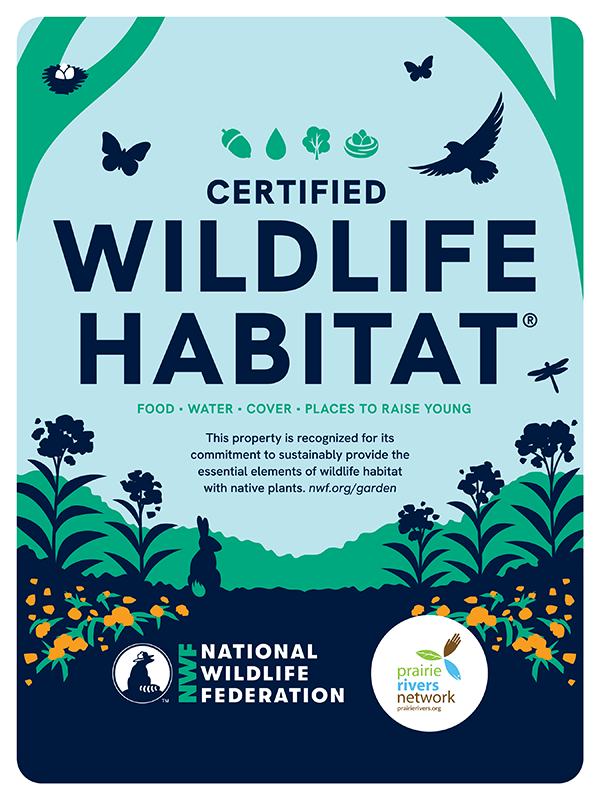
A Certified Wildlife Habitat sign lets passersby know that you have provided a safe haven for Illinois wildlife. These habitats provide food, water, and shelter to wildlife that resides in your area or migrates through. They bring joy and beauty to your life and your community while informing the public of the requirements wildlife need to survive.
Why It Matters More Than Ever
Illinois wildlife is under serious threat from habitat destruction, climate change, and pesticide use. By growing native plants in your home garden, on your farm, at your place of worship, in a park, or in a schoolyard, you provide a safe haven for wildlife to forage, live, reproduce, and find shelter. Every certified habitat, no matter the size, is a meaningful step toward rebuilding what has been lost.
Ready to Get Started?
Once your habitat meets the requirements, you can register and certify your space through the NWF. You’ll receive an official certificate and can purchase a yard sign to share your commitment with your community. A portion of the certification fee comes directly to Prairie Rivers Network so we can continue our mission. Learn how to certify your habitat here → Certified Wildlife Habitat Application and Checklist
What You Need to Get Certified
To earn your Certified Wildlife Habitat designation, your space must meet five essential requirements below. If you want to learn more check out this webinar on YouTube and view the associated slides.
1. Food Sources (at least 3)


Provide natural food resources such as native flowering plants that offer nectar, seeds, forage, and pollen for direct consumption. These plants also serve as habitat for small invertebrates that are eaten by many animals.
2. Water Sources (at least 1)


Wildlife needs clean, accessible water for drinking and bathing. Options include a birdbath, pond, rain garden, or even a shallow dish kept clean and filled regularly.
3. Cover for Wildlife (at least 2)


Animals need places to shelter from the weather and predators. Mature trees, brush piles, fence rows, and pollinator strips all count. Leaving some areas of your yard a little “wild” goes a long way. Leaving long hollow stems in the winter provides excellent cover for native bees and insects.
4. Places to Raise Young (at least 2)


Support the full life cycle of wildlife by providing spaces to nest and raise offspring. Ponds, brush piles, areas of undisturbed native vegetation, places to burrow, and large trees with cavities are all excellent options.
5. Sustainable & Ecologically Sound Management


Commit to practices that protect the ecosystem, minimize or eliminate pesticides (herbicides, fungicides, and insecticides), reduce your light pollution, plant native plants, remove invasive species, and leave the leaves! Including these, or other practices on your property, shows your commitment to sustainable practices.
Resources & Helpful Links
Certification & Program Info
- Certified Wildlife Habitat – Application & Checklist
- For Schools – Schoolyard Habitat Planning Guide
- For Communities – Community Wildlife Habitat Program
Prairie Rivers Network Garden tips:
- Certify Your Garden!
- From Lawn to Sanctuary: How Small Changes Create Big Impact During Garden for Wildlife Month
- Leave the Leaves this Fall
- Gardening Goals for the New Year
Native Plant Resources
- NWF Native Plant Habitats
- Illinois DNR Native Plant Lists
- Illinois DNR Native Plant & Pollinator Chart
Container & Balcony Gardening
- NWF Container Gardening with Native Plants
- Illinois DNR Container Plant List
- Wild Ones Blog: Native Plants for Urban Balconies
Questions? We’re Here to Help.
For more information, or to speak with a staff person about pollinator habitat or certified wildlife habitat on your property, please contact: Nina Struss nstruss@prairierivers.org or Liz Mackenbach lmackenbach@prairierivers.org