Find out how your co-op compares and use your voice to inspire positive change!
Rural electric cooperatives (co-ops) power the lives of hundreds of thousands of rural Illinoisans. As renewable energy becomes cheaper than ever, co-ops now have access to unprecedented funding to modernize their power sources. And the member-owners of co-ops have a chance to use their voice in the process!
If you want to shape your community’s energy future, you have a powerful tool at your fingertips: the Illinois Rural Electric Cooperative Scorecard. The Rural Electric Scorecard Initiative (RECSI) researched and scored every co-op in Illinois on a wide range of practices, including transition to renewable energy, member-owner programs, transparency, and governance.
The 2025 scorecard shows that 20 of Illinois’ 25 co-ops have made measurable strides, yet they still face urgent work to live up to their democratic values and ensure rural communities make progress toward, and benefit from, the clean energy transition.
Find out how your rural electric cooperative ranks!
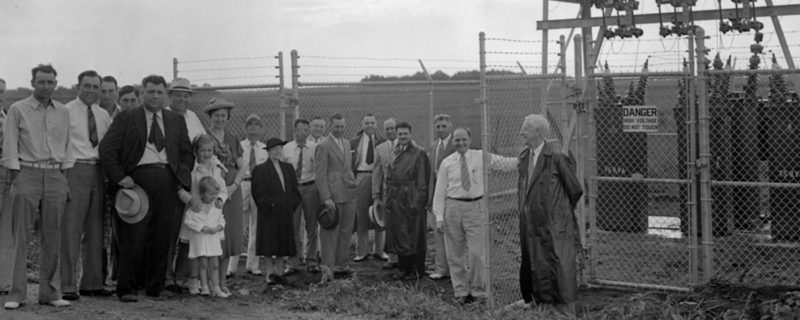
Photo courtesy of the Mclean County Museum of History, Bloomington, IL
Rural Electric Cooperative History and Opportunity
Rural electric cooperatives (co-ops) were established in the late 1930s under the New Deal to bring electricity to rural areas. Today, they remain vital to these communities. With the clean energy transition in a state that continues to support clean energy and grid modernization, co-ops enjoy their greatest opportunity since their inception. You may not realize it, but as a member, you have the power to influence how your co-op operates. As a co-op member-owner, now is a crucial time to get involved.
The recently passed Clean and Reliable Grid Affordability Act lays out new requirements for rural electric cooperatives. Generation & transmission co-ops will now be required to perform energy planning, as well as create models that aim for 40% renewable energy by 2030. Cooperatives will also be required to increase transparency and strengthen their energy democracy. Co-ops will also need to publish their by-laws, publish meeting agendas and minutes, and make their election processes public. These provisions will help member-owners identify when their boards are making important decisions.
Rural Electric Cooperative Scorecard
RECSI researched and scored every co-op in Illinois on a wide range of practices related to program offerings and accessibility. Program offerings include things like energy efficiency rebates and solar energy opportunities. Accessibility practices relate to how well co-ops are embodying their democratic principles, and include measures like sharing information on electric bill transparency and providing websites about voting in board elections. More information on the methods and the standards by which co-ops were ranked can be found on the scorecard methodology page. This simple yet effective tool evaluates how well your co-op delivers on its promises.
2025 Scorecard Key Takeaways
- Co-ops are motivated to do better: Co-ops have already used the scorecard findings to guide updates to their website that will help member-owners better engage with their co-ops. Twenty of Illinois’ 25 co-ops improved in at least one way between 2024 and 2025. Thirty-nine points were improved across 12 of the 16 metrics on the 2025 scorecards.
- Rebate programs: Two cooperatives added rebate programs to assist member owners in making energy efficiency upgrades that can save money and energy. Sixteen out of 25 co-ops now offer a rebate program.
- Transparency in fuel mix: Three cooperatives increased their transparency concerning fuel mix (e.g., Eastern Illini reports 62% of their energy is sourced from coal at the Prairie State Energy Campus, 4% from wind, and 34% from contracts and purchases). This doubled the cooperatives that publish their fuel mix data, with six cooperatives now doing so.
- Fossil fuel dependence: Co-ops’ reliance on fossil fuels ranges from 53% to 89%, underscoring the urgency of transitioning to cleaner energy sources. Opaque market purchases likely make the dependence on fossil fuels higher than the direct report.
- Democratic participation: Seven cooperatives added information to their website describing how member-owners can vote for the Board of Directors. Twenty cooperatives now publish this basic information. Five cooperatives increased their transparency on how member-owners can become a candidate for the Board of Directors. Nearly three out of four cooperatives now publish how to run for their board.
- Operational transparency: Only two cooperatives added minutes and agendas to their website. Only 11 cooperatives follow this best practice. The recently passed Clean and Reliable Grid Act now requires rural electric cooperatives to post agendas and minutes. That legislative change will be tracked by the scorecard.
Learn more about 2024’s scorecard.
Your Voice Matters
This Scorecard provides a clear picture of each co-op’s strengths and identifies areas for more growth. So it’s more than just a report card– it’s a roadmap for action. Member-owners, the public, leaders, and policymakers are encouraged to visit the Scorecard website at www.greenneighborchallenge.org/CoopScoreCards to explore the results and learn how they can get involved. By harnessing the power of their collective voice, rural communities can ensure that their co-ops embrace a future powered by clean, renewable energy.
If you are served by a Rural Electric Cooperative and you’re interested in learning more, let us know by filling out this form or reach out to Anthony Henson, PRN’s Rural Energy Organizer, at ahenson@prairierivers.org.
About the Rural Electric Cooperative Scorecard Initiative
The Rural Electric Cooperative Scorecard Initiative (RECSI) is a collaborative effort of Prairie Rivers Network, Dakota Resource Council, North Dakota Native Vote, Citizens Utility Board – Illinois, Sierra Club Kansas, Renew Missouri, Solar United Neighbors Indiana, Midwest Energy Efficiency Alliance – Iowa and South Dakota, and Green Neighbor Challenge Wisconsin. The initiative is dedicated to promoting energy democracy and empowering rural communities to participate in the clean energy transition.