
Data Centers in Illinois
Data centers are surging into Illinois, and they pose unique challenges to our electric grid, our communities, and our water; their demand for an immense amount of 24/7/365 electricity has already wreaked havoc on our electric bills, and will continue to do so without policy action.
Many existing data centers have failed to be good neighbors to their host communities, running jet engines for days on end to power their facilities and conducting important negotiations behind closed doors. In a time when Illinois is experiencing water stress, data centers are a new massive water user with little or no transparency due to Illinois’ antiquated water use laws.
This unprecedented challenge requires a specific, thoughtful, and robust response to ensure that a once-in-a-lifetime technological upheaval does not overturn Illinois’s progress towards affordable clean energy, plentiful clean water, and resilient communities. Prairie Rivers Network is working on a statewide policy solution—the POWER Act—and supporting frontline communities impacted by individual projects.
BACKGROUND
Data centers—buildings housing computing infrastructure—are not new. In fact, data centers have existed at some level for decades, expanding gradually in size and scope alongside the development of new technologies, many of which we now take for granted in our day-to-day lives. Social media, media streaming, cloud storage, and other applications all require servers and other tech infrastructure, and have all contributed to the flourishing of data centers.
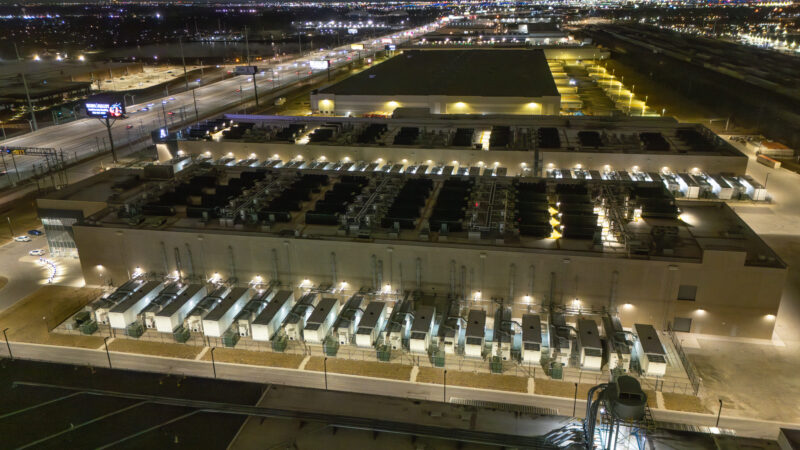
The situation has changed radically since ChatGPT’s launch in 2023. Due to the swift advent and mainstreaming of compute-hungry generative artificial intelligence tools (ChatGPT, Claude, and others), Illinois and the entire nation are experiencing a dramatic increase in the number of proposed and developed “hyperscale” data center projects. The scales are truly staggering: An 800-acre data center proposed in Joliet would need 1800MW of electricity—more than is generated by the Prairie State coal plant, the 7th largest single source of CO2 in the country.
Data center development shows no sign of slowing down; if anything, the push for more facilities in Illinois is accelerating rapidly.
WHY IS UNCHECKED DATA CENTER GROWTH A PROBLEM?
The rapid incursion of data centers into Illinois brings a number of issues to the fore:
Water. Hyperscale data centers require vast amounts of land, water, and electricity to house the equipment and to keep it cool. A hyperscale data center using evaporative cooling can use as much water as a small city. Our state is uniquely vulnerable to a boom in water-thirsty data centers. Illinois’ water use laws are centuries old, with no meaningful checks on big users depleting our water. There is no meaningful oversight, permitting system, or impact analysis.
Power. Illinois’ electric grid and generation capacity cannot meet the needs of ratepayers and incoming data centers without significant upgrades and investment. The costs for these upgrades and the impacts of data centers’ power use are often passed on to ratepayers, who are already paying exorbitantly high power bills.
Communities. Finally, the negotiations between cities/counties and companies wishing to build data centers are often shrouded in secrecy, with little public input or even awareness until after deals have been made. In some cases, data centers are built in vulnerable communities already experiencing significant air and water pollution.
THE POWER ACT – PROTECTING OUR WATER, ENERGY, AND RATEPAYERS
Prairie Rivers Network, the Illinois Clean Jobs Coalition, and other partners kicked off the spring 2026 legislative session by introducing the POWER Act (HB5513/SB4016). This pioneering legislation is designed to hold data center developers accountable for the impact they have on area communities by requiring them to disclose their water use and its impact on other users. The POWER Act would also ensure that data centers pay the actual cost of their energy consumption without shifting the burden onto their host communities. In short, the POWER Act will keep data centers in check, keep communities informed, and keep Illinois on track to meet its clean energy goals.
TAKE ACTION ON THE POWER ACT
- Use PRN’s action alert to tell your legislators in the Illinois General Assembly to co-sponsor and vote “yes” on the POWER Act this spring
- Follow the POWER Act on the Illinois General Assembly website (HB5513/SB4016)
- Read the POWER Act (Note: The bill is over 600 pages)
RESOURCES FOR COMMUNITIES AND ADVOCATES
- PRN’s Community Guide to Challenging Data Centers in Illinois is a comprehensive, printable living document created by and for communities in Illinois facing this challenge.
- In late 2025 and early 2026, PRN and University of Illinois Extension’s Community and Economic Development team co-hosted “Watt’s Up With Data Centers?”, a 3-part webinar series offering many perspectives on data center development in Illinois.
- Understanding Energy and Water Use, and What Communities Can Do (video recording and blog post)
- Community and Utility Perspectives (video recording and blog post)
- Community Strategies for Responding to Data Center Development (video recording and blog post)
- Illinois Clean Jobs Coalition POWER Act Fact Sheet
- PRN Member Briefing | The POWER Act | March 6, 2026
RELATED MEDIA
County board hears from all sides regarding proposed data center (Sangamon County)
Ammons, Rose tout bills on data centers and energy (Champaign County)