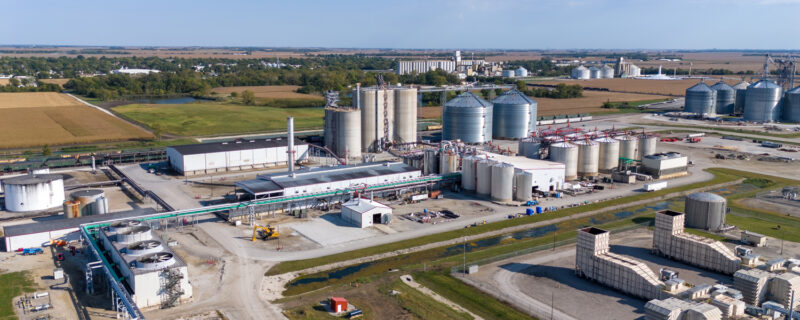
As demand for gasoline fades, ethanol producers like One Earth Energy are turning to sustainable aviation fuel, or SAF, as a potential lifeline. The company hopes its corn-based ethanol can power cleaner jet fuel and keep the industry afloat as the world shifts away from fossil fuels. Supporters hail SAF as the next frontier of green energy, but skeptics question whether it is truly sustainable or merely a repackaging of traditional ethanol. Turning corn into jet fuel may sound like climate progress, yet it maintains the same industrial system, one still tied to carbon, land, and water costs.
The global push for SAF gained momentum after the 2015 Paris Agreement, when world leaders committed to achieving net zero emissions by 2050. Soon after, both the International Air Transport Association (IATA) and the International Civil Aviation Organization (ICAO) issued their own pledges, acknowledging aviation’s growing contribution to climate change. In 2024, Illinois Governor JB Pritzker renewed this momentum at the SAF Conference in Rosemont, announcing plans to to make Illinois a hub for sustainable fuel development. With its strong agricultural base and expanding climate incentives, including a $1.50 per gallon tax credit and CEJA provisions, which include the phase out of carbon emissions from energy and transit, Illinois appears well-positioned to take a leading role in net zero aviation.
Despite this optimism, we should be cautious about buying into the hype. Achieving net zero aviation remains a distant goal. The IATA projects that SAF must supply 65 percent of jet fuel by 2050, yet current production covers less than one percent of global demand. U.S. agencies aim to replace all domestic jet fuel with SAFs by 2050, but in 2024 output barely reached 30 million gallons, far short of the three billion gallons needed by 2030. Closing that gap would require orders of magnitude more feedstock and infrastructure than currently exists.
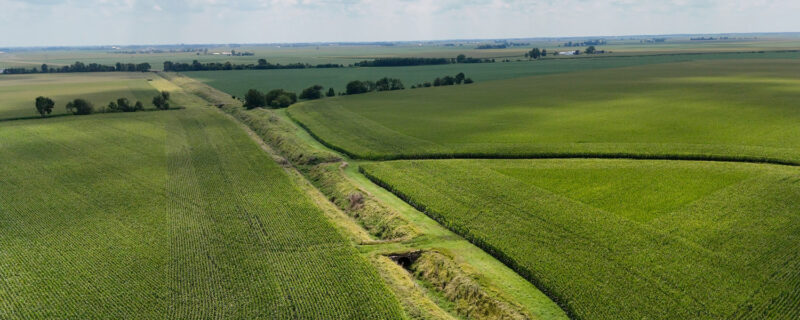
Most SAFs are made from fats and oils through the HEFA process, often using food-grade feedstocks such as corn and soy. This raises concerns about deforestation, competition with food production, and limited carbon reduction benefits. Even optimistic analyses acknowledge that crop-based SAF offers modest emissions reductions–if any–once land-use change and fertilizer use are factored in. And because aviation demand continues to rise, SAF doesn’t so much eliminate emissions as attempt to slow their growth.
Scaling SAF production to the levels envisioned by the aviation industry appears impractical. Meeting these targets would require a massive expansion of corn and soy cultivation, far beyond what current farmland can support without displacing food crops. Advocates suggest this could occur on marginal land, but such land is scarce, and determining what qualifies as marginal is far from straightforward. In the United States, more than 75 percent of available farmland is already dedicated to food, feed, and exports, while much of the remainder consists of grasslands, wetlands, and forests that store carbon and support biodiversity. Converting these areas would undermine the very sustainability SAF proponents claim to advance.
Policy and politics further complicate the SAF hype. The Inflation Reduction Act created a tax credit to promote SAF, starting at $1.25 per gallon for fuels cutting emissions by at least 50 percent. Initially, only SAFs meeting strict ICAO standards qualified, excluding high-emission corn ethanol. However, after lobbying by ethanol producers, the government adopted the GREET model, which downplays land-use emissions, allowing corn- and soy-based fuels to qualify. The Biden administration even funded adjustments to make this possible. Governor Pritzker’s participation in the 2024 SAF Conference, which was actually organized by IL Corn Growers Association, highlights how policy, politics, and powerful farm interests now shape the SAF public narrative.
All of this raises a fundamental question: Is SAF a climate strategy, or simply a new market for the same old system? The facts point toward the latter. SAF, as currently envisioned, relies heavily on commodity crops that already strain soils, waterways, and rural economies. Scaling corn- or soy-based aviation fuel would increase fertilizer use, accelerate erosion, and place even more pressure on marginal lands—all while delivering minimal climate benefit.
Illinois has an opportunity to lead, but leadership doesn’t mean chasing every “green” market offered by the industries we already subsidize. True climate leadership would focus on reducing aviation demand, accelerating efficiency, and developing SAF pathways that do not depend on vast quantities of food-grade crops. It would also mean investing in agricultural diversification, soil restoration, perennial crops, and regional food supply chains—strategies that strengthen rural communities rather than tying them to another volatile commodity cycle.
SAF may have a role to play in aviation’s future. But treating corn and soy as the backbone of that future is neither sustainable nor realistic. The state should resist the temptation to replicate the ethanol era at 30,000 feet. A cleaner aviation system—and a healthier agricultural system—will require innovation, not a rebranded version of the status quo.