FOR IMMEDIATE RELEASE
Wednesday, April 29, 2026
Contact:
Kim Erndt-Pitcher | Director of Ecological Health | Prairie Rivers Network
kerndt-pitcher@prairierivers.org | 217-344-2371
Lisa Bralts | Communications Director | Prairie Rivers Network
lbralts@prairierivers.org | 217-417-5456
Drifting Pesticides Not Only a Rural Concern
Report: No regions or public spaces are unaffected by chemical trespass
Champaign, Ill. – Pesticide drift across Illinois continues to seriously threaten trees and gardens, and the impact of repeat, involuntary exposures on people enjoying the outdoors is coming into clearer focus, according to updated research from Illinois environmental non-profit Prairie Rivers Network.
“Pesticide Drift in Public Spaces”, published on April 28, 2026, builds on the groundbreaking work done by PRN with 2024’s “Hidden in Plain Sight”.
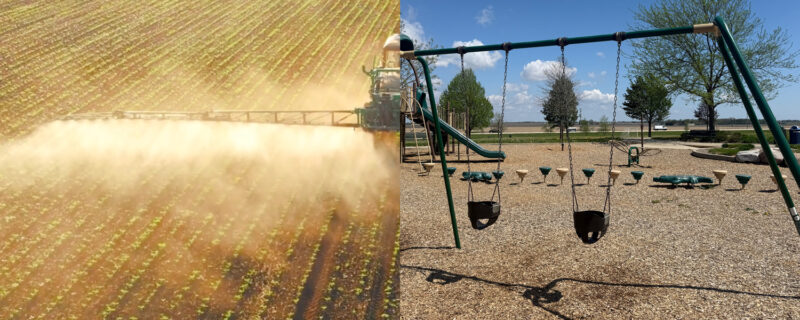
The new, expanded research zeroes in on the presence and frequency of pesticide drift in outdoor public spaces, including those not immediately adjacent to farmland. Schools, parks, and playgrounds in both rural and urban areas throughout Illinois were among the locations monitored as part of the study.
Pesticides were detected in leaf tissue and on monitoring bands during each sampling period at all locations. “There were an average of 20 drift events occurring at each site during the growing season,” said Kim Erndt-Pitcher, Prairie Rivers Network’s Director of Ecological Health and project lead. “This includes a playground that was nearly three-quarters of a mile from the closest potential source of large-scale pesticide applications.”
“People who live in more populated areas of the state may believe they are not being exposed to drifting pesticides,” Erndt-Pitcher said, “but the expanded study illustrates that pesticide exposure is more common than is widely acknowledged. The data show that chemical trespass on trees, plants, and the places we frequent is indiscriminate—and widespread.”
“This is the first study of its kind conducted in the United States,” said Dr. Greg Spyreas, a botanist and scientific reviewer of the study. “PRN has already documented yearly recurring damage to trees, including fruit trees, street trees, and surrounding natural areas, but this latest research builds on that evidence by demonstrating how widespread airborne exposure to pesticides has become.
“The findings are clear: public spaces across Illinois are being exposed to several pesticides through the air without people’s knowledge or consent, and this raises serious concerns about current pesticide practices, public health protections, and the air we breathe.”
“A child’s right to clean air should not require hypervigilance, significant agricultural research, and chemical guesswork,” noted Abbie Frank, founder and executive director of Bluestem Hall Nature School in Urbana, IL. “ Why are drifting pesticides able to harm our trees and pollute our children’s air without any accountability? Future generations will look back at the practices of this time with profound disappointment.”
Climate change has also influenced when drift occurs, with applications beginning earlier thanks to shorter winters. While the 2026 growing season is well underway and the majority of the early spring pesticide applications are now complete, there will be more applications throughout the growing season.
“Illinoisans’ tax dollars pay for beautiful and healthy places for our children to play and learn, and for us to enjoy nature,” said Erndt-Pitcher. “Drifting pesticides are not only harming those investments, but also our communities statewide.”
###
At Prairie Rivers Network (PRN), we protect water, heal land, and inspire change. Using the creative power of science, law, and collective action, we protect and restore our rivers, return healthy soils and diverse wildlife to our lands, and transform how we care for the earth and for each other. PRN is the Illinois affiliate of the National Wildlife Federation. To learn more please visit www.prairierivers.org.