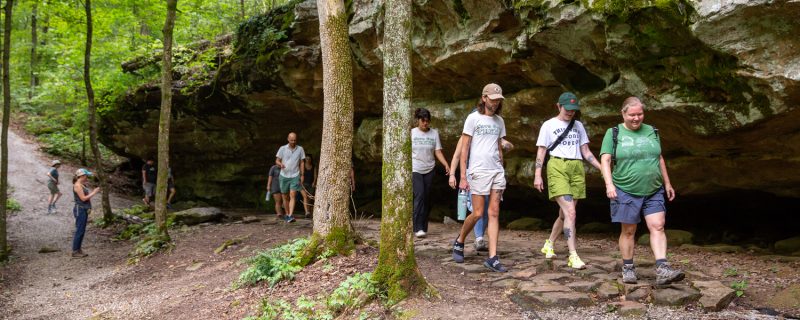
We often view outdoor, natural spaces simply as places for people to recreate and where wildlife seek refuge. These things are true and important, but they can also be places that provide critical health, economic, and workforce opportunities for our communities. Our recent Resilient Communities Webinar series brought together experts to explore how investing in outdoor spaces can help communities thrive.
The webinar, co-hosted by Prairie Rivers Network and University of Illinois Extension, invited Dr. Katie Dudley (Community and Economic Development Extension Specialist, University of Illinois), Dr. Brooke Jacobs (Owner, Delve Health Consulting), and Dr. Evan Coulson (Founder,Trailhead Collective) to present. Their individual unique expertise in mental health, youth development, and economic development are seamlessly woven into a practical way to connect these systems that are too often kept separate. In this post, we’ll summarize the webinar but you can always watch the full episode on our YouTube channel.
Each of our guests is deeply connected to rural Illinois; all left to pursue education, careers, and opportunities elsewhere, only to be drawn back to their home regions to build a better future for all. Dr. Katie Dudley kicked off the episode with a story that may feel familiar to most rural youth:dealing with the pressure to leave home and build a life elsewhere. She shared how a chance encounter brought her together with our other guest speakers. Hearing each others’ stories, they began to ask: What would it look like if rural youth didn’t have to leave for 20 years before they could see a future in the place they call home? What would it look like if young people could feel connected, needed, and capable of helping shape the futures of their communities now?
Health and Wellness in Rural Communities
Dr. Brooke Jacobs began her company, Delve Health Consulting, to address the lack of clinical psychologists in the Southern Illinois region, and works to help organizations improve their overall health. Dr. Jacobs believes that outdoor recreation isn’t just a lifestyle benefit—it functions as preventative healthcare infrastructure, citing measurable changes in mental health, physical health, and long-term disease outcomes that reduced the overall burden of healthcare on the communities. By regulating stress physiology, restoring cognitive functioning, and reducing risks for mental health disorders, nature doesn’t just make us feel calmer—it’s cognitively restorative.
Dr. Jacobs directly linked these impacts of nature to positive improvements in workforce performance, decision-making, and burnout prevention. She encouraged rural communities to lean into their existing recreational areas, including using their large areas of greenspace to generate positive public health outcomes by building social connections and creating low-barrier mental health interventions. Through nature-based wellness, communities could start to look at their local nature trails as low-barrier health systems.
Outdoor Economy as Regional Economic Infrastructure
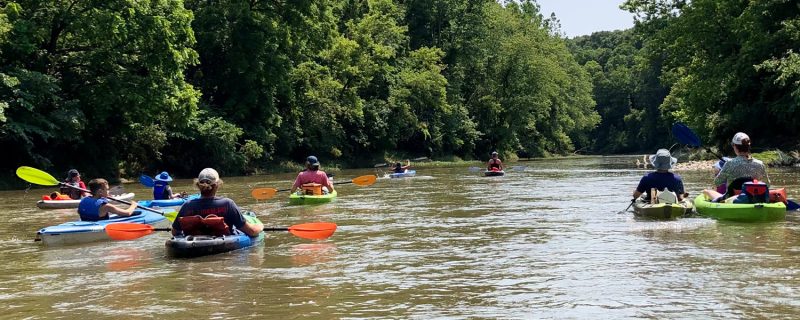
Dr. Katie Dudley, a Community & Economic Development Specialist with University of Illinois Extension turned our audience’s attention to the opportunity for tangible local returns such as jobs, tax revenue, and small business activity around the outdoor economy. She shared that the outdoor recreational economy accounts for about 2.4% of the U.S. GDP—about $700 billion nationally and $26+ billion in Illinois alone. As the data shows, outdoor recreation isn’t a footnote to our economy; it’s actually a vital part of rural economic infrastructure. Dr. Dudley reiterated the opportunity is not in building something new— it’s in recognizing and investing in what’s already working. She argued that instead of measuring our communities’ success by the number of visitors, we should instead be measuring our communities’ overall well-being.
By shifting our focus from the traditional model to this regenerative approach, tourism becomes more about creating a net positive value for the communities economies and ecosystems, and not just about increasing visitation. Regenerative tourism is a community development strategy that uses outdoor assets to build health, youth pathways, and a more resilient local economy.
She highlighted the Baileys Trail System in Ohio, which acts as a regional development strategy with over 88 miles of trails built on reclaimed mine land. With $10 million in blended public and private funding, and managed as a local social enterprise, the trail was designed with shared stewardship and local ownership in mind. Over 10years, the system has increased regional spending by $40 million, created 78 new jobs, retained 150 jobs, boosted local tax revenue by $1 million, avoided $500,000 in community healthcare costs, connected three communities, and integrated environmental restoration and workforce pathways – all while supporting small business growth. The projects Dr. Dudley showcased allowed our audience to see how building systems instead of projects creates compounded community benefits.
Natural Resources Youth Workforce as Resilience
Dr. Evan Coulson, founder of Trailhead Collective, shared how youth development can be designed to not only build our natural resources workforce, but also build our youth’s connection to the land, ensuring they feel needed and capable of contributing to their communities in a positive way. Through a collaboration with the Friends of the Shawnee, the Shawnee National Forest, local IDNR staff, and local high schools, the first-ever Youth Conservation Corps is being established in Southern Illinois. Offering paid conservation work doesn’t just provide students with the opportunity to develop marketable skills – it helps land managers complete the backlog of deferred maintenance. This system also provides multiple off-ramp opportunities for entry level work, including seasonal and permanent positions for students as they grow through the Youth Conservation Corps program. Dr. Coulson cited the benefits of connecting young people to meaningful work, including improved health and wellbeing, increased social belonging, development of agency and purpose, youth workforce readiness, and improved regional economic infrastructure. By creating opportunities for young people to earn money while building a connection to their community, this initiative is ensuring individuals feel needed and capable of creating change.
Investing in a Resilient Future
Our guest speakers touched on the benefits of each of their areas of expertise. Dr. Jacobs showcased how nature can heal, Dr. Dudley highlighted the economic value of outdoor infrastructure, and Dr. Coulson brought it all together by putting opportunities for growth in the hands of our youth. By weaving these issues together, this system is able to produce the workforce, deliver health benefits directly to our youth and build connections to communities that counter the brain drain of out-migration. It’s a great example of how communities can choose to invest in outdoor recreation while simultaneously improving public health, creating economic opportunity, and building a pipeline for youth development and workforce readiness.