Chemical trespass — the movement of pesticides through the air to a non-target site — is damaging wild and cultivated plants and trees throughout Illinois, threatening human health, and impairing our ability to adapt to a changing climate. The sources of chemical trespass are primarily from Illinois’ massive agriculture industry, but they certainly include chemical lawn and turf treatments.
Since 2018, Prairie Rivers Network has been monitoring symptoms of herbicide drift damage to non-target broadleaf plants and trees across rural and urban Illinois. Through PRN’s Tree and Plant Health Monitoring program, widespread symptoms of injuries have been documented year after year; more than 99% of the sites monitored exhibited symptoms every year.
In July 2024, PRN released Hidden in Plain Sight, a report providing a 6-year summary of our findings.
In 2026 PRN released an addendum, Pesticide Drift in Public Spaces. The addendum explores the frequency and distribution of pesticide drift in the places where children and adults play and learn. Ten parks and schoolyards were sampled across the state during the five warm weather months (Illinois’ growing season) in 2025.
Over this period of time, every site and sampling event demonstrated the presence of herbicides and/or fungicides.
Hidden in Plain Sight (2024) by the numbers:
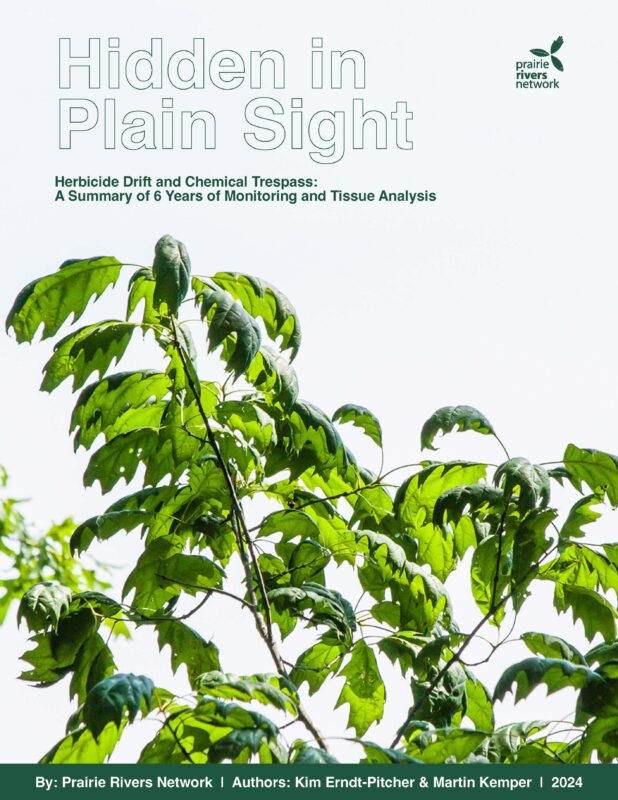
- Nearly all (279 of 280) sites where monitoring was conducted had symptoms of herbicide damage.
- Every site monitored since 2019 had symptoms of herbicide damage.
- More than 90% of tissue samples tested (115 of 127) had detectable herbicide levels in them.
- Drift injuries were recorded each year at nearly every site with multiple visits (142 of 143 sites).
- All six sites located more than a mile from any potential source had detectable pesticide residues.
Pesticide Drift in Public Spaces (2026) by the numbers:
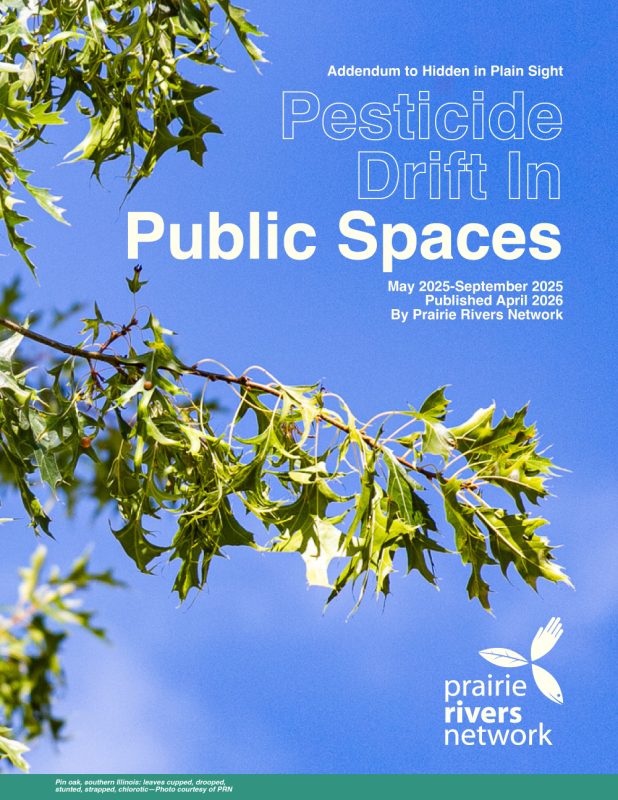
- From May through September of 2025, PRN visited the monitoring sites 50 times.
- Between all 10 sites monitored, there were 296 detections of 18 different pesticides during the growing season — an estimated 200 of these detections were independent exposure events.
- The most frequently detected pesticide was 2-4D — a pesticide considered to be a possible carcinogen by the International Agency for Research on Cancer.
- On average, there were 20 independent pesticide exposure events for each site during monitoring.
- 3,700 ft was the furthest distance measured that a pesticide travelled from a potential application source during monitoring — putting nearly 50% of schools, 54% of parks, and 40% of daycares in the state at risk of pesticide exposure.
Chemical Trespass and the Health of Our Ecosystem
The consistent presence of symptoms across monitored regions indicates that exposure to herbicides and pesticides is widespread, and repeated exposures in our natural spaces and communities are playing a significant role in the decline in Illinois’ environmental health.
The impacts of drift — such as declining tree health and eventual death — have become evident during our years of monitoring. These declines in tree health have also been observed and documented by managers of public lands, private landowners, and outdoor enthusiasts across Illinois, and much of the Midwestern and Southern United States.
Declining tree health triggers a cascading series of adverse impacts to our natural areas, public spaces, and home landscapes alike. The death of valuable trees like oaks causes financial, aesthetic, and psychological distress to property owners and communities.
Hidden in Plain Sight, along with the Pesticide Drift in Public Spaces addendum, outlines problems with the way pesticides are used and regulated in Illinois, finding that current safeguards are inadequate to protect people and the environment from harm.
There is no single solution for this problem.
Actions that can greatly reduce pesticide drift and chemical trespass are many and include: reducing the use of or eliminating the most dangerous and volatile pesticides, diversifying our agricultural system, helping farmers become less reliant on pesticides by supporting the use of integrated pest management practices, going chemical free in our communities, reforming the pesticide complaint, reporting, and enforcement process in Illinois, and stronger rules and regulations around the approval, use, and disposal of pesticides in Illinois.
PRN is committed to working at the state, local, and federal level to reduce the harmful impacts of chemical trespass.
Appreciate this work? More than 90% of funding for our herbicide drift monitoring work has come from individual donations, from people like you. Please consider supporting this work with a donation today.