A recent PRN blog post, Is That Even Real? “How Mis- and Disinformation Influence Perception of Environmental Issues”, discussed the whos, whats and whys of mis- and disinformation. Now that readers are armed with the knowledge needed to detect misinformation, it’s time to address common topics that are used to spread it within the renewable energy space.
The Need for Renewables
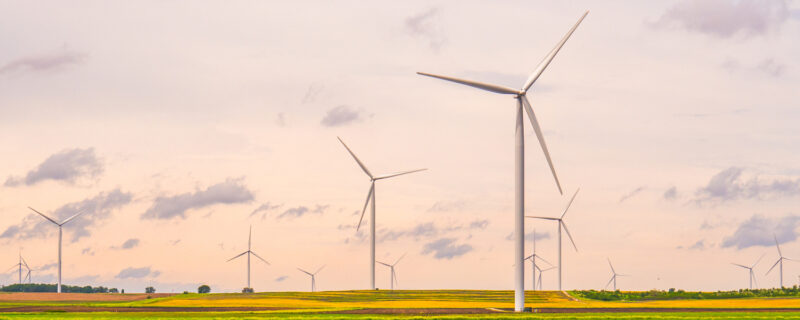
With rising energy costs, aging infrastructure, geopolitical instability, and climate change impacts threatening the safety of many communities, the benefits of renewable energy are becoming increasingly evident. They provide reliable localized energy production, lower dependence on other nations to meet our energy needs, decrease greenhouse gas emissions, increase public health by lowering air and water pollution, use less water than traditional fossil fuel sources, diversify income streams for farmers and communities, and more. Given the impacts caused by our fossil fuel-dependent society, it’s more important than ever to be able to cut through the lies and make well informed decisions about our future.
In Illinois, renewable energy is having its moment, spurred by friendly policies and statewide support for addressing climate change. Unfortunately, misinformation tends to follow these projects around. It attaches itself to topics near and dear to people’s hearts, encouraging them to be outspoken about their concerns. Social media comments quickly become battlegrounds, and city/county officials become punching bags during board meetings. This can lead to project delays and, in some cases, project cancellations, which may ultimately harm the community. While this discourse can feel uncomfortable and gives misinformation airtime, it does allow for experts to address the issues.
Encouraging the Divide
In Part 1 of this series, we looked at disinformation (the intentional spread of false or misleading information). The renewables space is not immune to these intentional campaigns. Fossil fuel-funded front groups advocate against renewable energy sources, often creating the sparks that allow for misinformation to spread like wildfire. Disguised as affordability and prosperity advocates, these front groups easily appeal to the public and can be hard to distinguish from more creditable groups. This article explores some front groups and who their funders are.
These organizations may also manufacture opposition. A recent article investigated public comment letters that opposed a renewable energy site in Ohio and found 34 were falsified using fake names or addresses. Even though removing these comments only brought those in favor up slightly above the majority, these kinds of false comments affect the integrity of the process.
Common Concerns
Creating a comprehensive list of misinformation around renewable energy would take a lifetime; instead, our aim here is to provide answers to common questions people have around renewables.
Why can’t renewables be placed anywhere?
Determining where solar can be located is often driven by the proximity to transmission infrastructure (e.g. power lines and substations), the amount of power flowing through the grid, and even age of existing infrastructure. If conditions are not met to support new power generation, then renewables cannot be placed there. In short, not every location is created equal in the eyes of energy development.
Do renewables have to take up so much space?
Utility scale solar, the large 50+ acre solar farms, are the cheapest form of electricity generation. The economies of scale make this type of solar generation much cheaper than small residential or commercial solar projects, which is the benefit of larger projects.
Will soil health be impacted?
With the increase of renewable energy sources on farmland, practices to minimize soil impacts are very important and have become widespread. Some soil management practices are even guided or required by both local zoning and state agency requirements. At the state level, companies are required to develop an Agricultural Impact Mitigation Agreement with the Illinois Department of Agriculture to guide how the soil and land are managed during construction, operation, and decommissioning of the site.
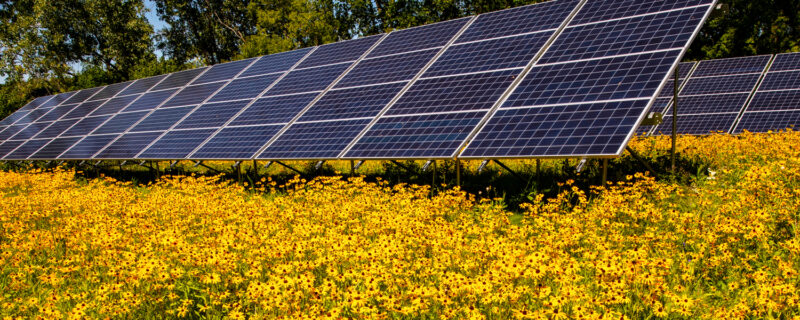
Other practices at solar farms, like perennial and pollinator friendly vegetation, provide benefits like decreasing erosion, building soil organic matter and increasing biodiversity compared to annual agriculture. Wind development focuses on the reduction of soil compaction and erosion. Both sources of renewable energy allow farmers/landowners to diversify their income and provide stability for future generations of farmers. And just like with farming practices, the landowner should be an active participant in ensuring the developer uses soil friendly practices.
What about our farmland?
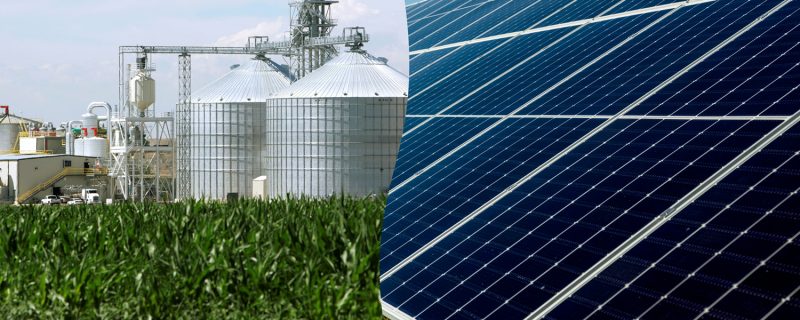
In Illinois, over 26 million acres of land is used to grow crops, compared to under 30,000 acres currently used for solar farms. The majority of this cropland is used for corn and soy. According to IL Corn, 27% of Illinois corn grown in 2024-2025 went directly to ethanol production. This number does not reflect exports that are filtered into ethanol production elsewhere in the world, with PRN estimating that 35% of the corn grown in IL makes its way into ethanol production (meaning that a portion of Illinois’ farmland is already being used for energy production). Temporarily converting a small fraction to renewables will not ruin cropland; the land can be converted back. Furthermore, landowners and aging farmers should have the choice to manage their land the way they would like, including the opportunity to benefit from renewable energy projects.
In October 2025, PRN’s Amanda Pankau presented at the inaugural Solar Energy Industries Association’s Sustainability Conference, discussing the importance of land stewardship efforts on solar projects. In a follow-up article in Inside Climate News, she shared perspectives on how, if done right, the energy transition has the potential to “heal the land” that’s been depleted by industrial farming.
Does renewable energy harm wildlife?
The largest threats to birds and other wildlife are land use changes (e.g., habitat destruction) and climate change, highlighting the need for better conservation efforts and a transition to renewable energy. Wind turbines and solar arrays can have effects on wildlife; however, efforts to reduce impact are already being explored, and the Illinois Department of Natural Resources provides recommendations for site-specific impact reduction for all renewable energy developments. These recommendations often include setbacks from streams and protected areas and require stricter protections when threatened and endangered species may be impacted. In Illinois, grassland bird populations are collapsing in a large part due to changing agriculture practices, specifically the conversion to row-crops. Responsible development of renewable energy can actually increase perennial vegetation that helps support birds and other wildlife.
Does manufacturing renewables cause more harm than good for the environment?
While solar manufacturing and mining for materials does have an environmental footprint, it’s far smaller than the ongoing pollution, habitat destruction, and climate harm caused by fossil fuel extraction and burning. Life cycle studies show that solar power produces less greenhouse gas emissions per kWh than coal, and manufacturing practices continue to improve in sustainability. Unlike fossil fuels, materials for solar can be recycled at the end of a panel’s life. The solar industry is also pushing for more sustainable and ethical mining practices, and ongoing innovation is reducing reliance on rare or hard-to-source materials.
Are there requirements for decommissioning renewables in Illinois?
In addition to guiding proper soil management during construction and operation of renewable energy projects, “agricultural impact mitigation agreements” with the Illinois Department of Agriculture also ensure that the land will be restored to its former state upon decommissioning. Similarly, county zoning usually requires decommissioning plans, including cost estimates and financial guarantees for clean-up.
Is there a plan for the decommissioned components?
When developing a renewable energy facility, decommissioning plans are created prior to development to ensure funding for removal. This ensures that there won’t be solar panels or wind turbines littering the landscape. It should also be noted that the waste from the solar industry specifically is minimal compared to fossil fuel waste and that the main components are recyclable, with advocates fighting for a circular approach to waste issues. In Illinois, the Renewable Energy Component Recycling Task Force has been created to ensure the state is being proactive about the renewable energy waste stream.
What happens if it hails?
Hail larger than .5” in diameter can pose a risk to solar panels as well as roofs, cars, and crops. Companies are already creating solutions to this problem by engineering panels to change the angle they sit at during storms, helping minimize wind damage and reducing the amount of surface area available for hail to hit. The decommissioning, insurance requirements, and financial guarantees that are part of county zoning agreements are important to ensure any damaged projects are properly cleaned up.
Do damaged solar panels harm the environment?
When solar panels are damaged, contamination from them has not been found at levels above the thresholds for any environmental factor (soil, water, etc.) by US EPA standards, EU standards, or WHO standards. Proper disposal and swift maintenance can reduce even the minimal effects that may be seen.
What about noise?
Renewable energy projects do generate noise. Zoning requirements for renewable energy projects reduce the effect sound pollution will have on residents of the area by requiring setback distances and sound limitations established by the Illinois Pollution Control Board. When visiting renewable energy sites, people often think only about how loud power generation is when standing right next to it, and do not realize how the impact would change by moving 200 feet away. With solar, there are a few components that may create loud sounds. Developers will often place these components near the center of a large development to further decrease sound pollution. Each state has different setback standards to reduce noise impacts. Illinois’ can be found here.
The More You Know
Remember: when checking information, not all organizations are made equal. For example, the “Institute for Energy Research” will often come up in search results when researching renewable energy. This institution is a front group that is funded by fossil fuel organizations. Always check the funders of research institutes and articles, and when in doubt, ask an expert. PRN’s experts can answer questions about water use, land impact, transmission, and development.
Our members have worked alongside us to stop and address pollution from fossil fuels, and they know the importance of transitioning to renewable energy to stop local pollution and mitigate the impacts of climate change. The dissemination of misinformation delays this process. Countering it with facts goes a long way toward bringing more people along as we work toward real change.
If You Want to Dive Deeper
All resources used to inform this blog can be found here: Resources to Fight Misinformation About Renewables