By Robert Hirschfeld, PRN’s Director of Water Policy
Published as a “My Turn” by the News Gazette
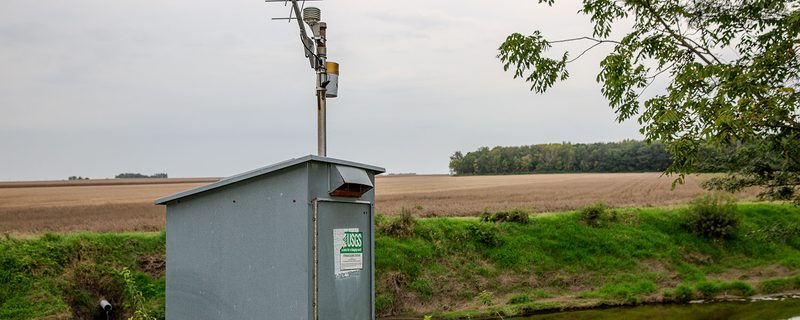
Since 1958, a streamgage on the Salt Fork just north of St. Joseph has tracked the river’s height and flow through floods and dry spells. On October 1, it will be shut down, along with another gage on the Spoon River and discharge data collection will be discontinued on the Sangamon River near Petersburg.
An Illinois State Water Survey engineer says closures like these are part of a statewide trend and more should be expected.
Turning off a streamgage won’t turn off a flood.
The problems that these gages help us monitor aren’t going anywhere just because we turn them off. Streamgages inform flood warnings and floodplain maps, helping community members navigate rising waters that impact their route home or threaten their home. This August, storms and catastrophic flooding in Indiana left at least seven people dead and caused billions of dollars of damage. Floods will still come. But now we will be less prepared.
We cannot manage what we don’t measure.
Gages also help track pollution. This summer, the Spoon River gage recorded nitrate at 27.1 milligrams per liter, its highest reading since measurements began in 2013 and nearly three times the federal drinking water standard of 10 milligrams per liter. That standard was set in 1962 to protect infants from blue baby syndrome. It has not changed since..
But new science increasingly links nitrate at levels far below the federal standard to cancer and other serious health problems. A large Danish study found higher colorectal cancer risk at less than a tenth of the U.S. limit. Next door in Iowa, where cancer rates are the second-highest in the nation and rising faster than anywhere else, nitrate has become part of a statewide conversation demanding action. University of Iowa researchers are now building a system to forecast nitrate in the state’s rivers. We need more eyes on nitrates entering our water, not fewer.
The same fields that send nitrate pollution into our streams also leach it into shallow rural wells. About 400,000 private wells serve roughly 1.3 million Illinoisans, and no one is required to test them regularly.
The state’s long term goal is to cut nitrogen and phosphorus pollution in our waters by 45%. So far, we have made limited progress. If we turn off our measuring devices, it will become increasingly difficult to know if we are meeting our goals.
Why are the gages going dark? The federal contribution to these gages hasn’t changed since 2018, while costs keep climbing, leaving locals to cover the difference. The Urbana & Champaign Sanitary District, which acted as a local sponsor, saw its bill rise substantially over the years. Its ratepayers helped sponsor the Spoon River gage for about a decade even though it sits outside the district. The district’s decision to pull back its funding is understandable. A gage that serves everyone downstream shouldn’t depend on one agency’s ratepayers.
The federal government’s retreat reaches well beyond St. Joe. Cuts and cost shifts across federal programs are leaving state and local budgets stretched thin.
The U.S. Geological Survey is short-staffed and has told state water planners it can’t maintain its current network. And the US EPA has once again stalled its long-planned review of nitrate’s health risks.Meanwhile the state climatologist announced 2026 was one of, if not the, most severe weather years on record.
What makes matters worse for Illinoisans is the rollback of federal protections on the natural infrastructure like wetlands that helps keep us safe. New federal rules are set to leave almost all of Illinois’ wetlands without Clean Water Act protection. These wetlands provide hundreds of millions of dollars’ worth of flood protection to Illinois homes and help clean our water. The damage compounds: fewer wetlands mean more flooding, fewer gages mean less warning. Taxpayers will still have to pay the emergency bill when it comes.
Long term, public goods deserve public money.
We need to expand our network of streamgages and dedicated funding to keep them online. But these gages need help right now. When Iowa lawmakers pulled funding for nitrate sensors, Polk County put up $200,000 and conservationists turned to crowdfunding. Champaign County, the University of Illinois, local businesses and residents could do the same now.
So could the industries that have profited most from remaking this landscape into a corn and soy factory, and whose polluted runoff these gages help measure. Roughly 80% of the nitrate pollution in Illinois waters comes from agricultural land.
Illinois already has a fund that acknowledges this connection: the Nutrient Research and Education Council, paid for by an assessment on every ton of fertilizer sold in the state, with a mission that includes water quality. The agriculture industry can and should be doing more. Better data helps farmers see which conservation practices are working, and it helps protect public health too.
Time is of the essence. The equipment will be turned off October 1, but we should have several more weeks before they will be removed entirely. Once the gages are pulled out, restarting will cost far more, and every month without data leaves a hole in a 68 year record that can never be filled. Let’s find a solution to keep the information flowing.