May 8, 2017 | Blog Post
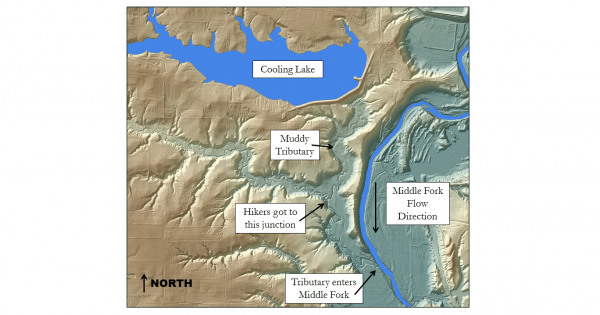
Two weeks ago, we posted a story about a mysterious discharge on the Middle Fork brought to our attention by some canoers. Following that story, some hikers reached out to PRN to corroborate the report. They were hiking in the area that day and noticed the same tributary flowing extremely fast and milky white. They followed the tributary upstream to a junction where two smaller tributaries meet to form the one that flows into the Middle Fork. The tributary to the east flowed fast and full of sediment while the tributary to the west was just a trickle.
Uncategorized
PRN to Join Groups Suing to Block Trump Rollback of Safeguards
May 3, 2017 | Press Release
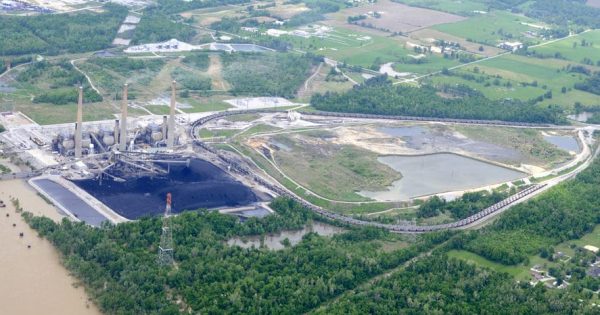
A coalition of environmental and public health advocates filed suit today to challenge a Trump administration rollback that could wipe out critical protections for cleaning up America’s leading source of toxic water pollution: coal power plant waste.
A Mysterious Discharge on the Middle Fork
April 27, 2017 | Blog Post
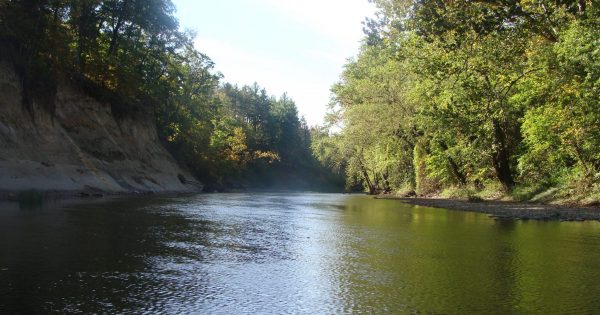
University and middle school students were canoeing on the Middle Fork this week on an educational field trip when they noticed something that seemed out of place. One of the small tributaries to the Middle Fork was flowing faster than any of the canoers had seen before, and it was flowing thick with milky white sediment. Upstream of this tributary, the water was perfectly clear, but downstream, the entire Middle Fork was cloudy and opaque.
A Day at Allerton
April 17, 2017 | Blog Post
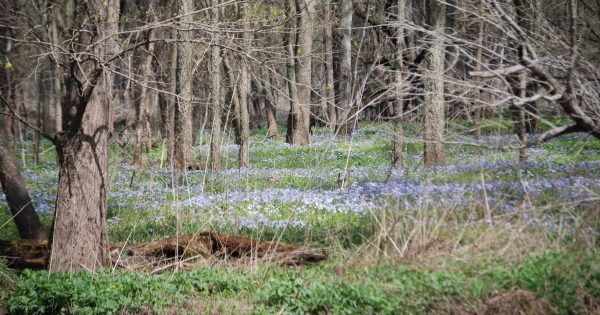
Western chorus frogs, a red-tailed hawk, blue-grey gnatcatchers, and a common garter snake. There was a tufted titmouse, a towhee, and a red-headed woodpecker. These are just some of the animals I saw or heard last Saturday at Allerton Park.
PRN member and birder David Thomas, PRN board member Rob Kanter, and I left Champaign around 9 in the morning and headed west along Interstate 72. A short 30 or so minutes later, we arrived at the Allerton Park Music Barn for an outing.
Widespread Dicamba Herbicide Use Threatens Midwest Crops and Habitat

April 7, 2017 | Blog Post
The use of dicamba herbicide will be greatly expanded in the Midwest this year with the planting of dicamba resistant soybeans on millions of acres. Dicamba has been registered for use since 1965 and is sold widely in hundreds of products for broadleaf weed control for crops, rights of ways, and lawns. The increased use this year threatens specialty crops, prairie, and pollinator habitat.