Topic: Coal

February 25, 2010

Coal Mine Lawsuit Captures the Attention of Illinois Attorney General

TheVoice-Lawsuit

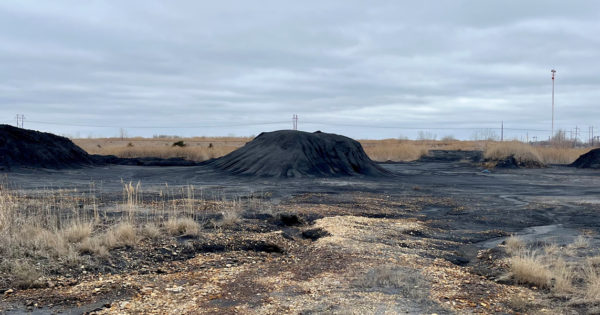
Prairie Rivers Network is holding polluters accountable when the EPA fails to enforce the law. A coal mine near Industry, Illinois, has violated its permit by discharging pollution (such as iron, manganese, and sulfates) at levels several times higher than allowed. Prairie Rivers Network and partners launched a lawsuit against the two coal companies that have owned the mine. The case caught the attention of Attorney General Lisa Madigan, who is now taking the case against the mine to the Illinois Pollution Control Board.

Read press coverege here from McDonough County The Voice.

  • Share/Bookmark
February 15, 2010

Coal: Dirty Past, Hazy Future

A Documentary by The Environment Report

An in-depth look at the future of coal in this country. The Environment Report explores the role that coal plays in our lives and in the lives of those who depend on coal mining for a living. Can coal truly be a viable option in the new green economy?

http://www.environmentreport.org/coal_doc.php

Public Radio, WILL AM 580 will air this program today, February 15, at 1PM CST, if you are in their listening area.

  • Share/Bookmark
February 9, 2010

ACTION ALERT: Call Your Reps on Hazardous Coal Waste

URGENT! Your Help is Still Needed to Protect Our Water from Hazardous Coal Waste

1) Please Phone Your U.S. Representative’s Office ASAP!

Many elected officials are bowing to industry pressure. Read more here and here. Don’t let the coal industry be the only voices heard. More than ever, out elected officials need to hear from their citizens that you value clean water and want it to be protected for future generations from hazardous coal waste.

Step 1: Find your district here.

Step 2: Find your district congressional representative contact information here.

Step 3: Call your representative, give your name and say…

I want coal ash regulated as hazardous waste, and I ask Representative __________ to do everything possible to see that coal ash waste gets strong environmental regulations that will protect our air and water for future generations.

Coal ash impoundments are current and long-term threats for groundwater pollution and to the health and safety of our citizens. It is well documented that coal ash has toxic heavy metals, which are particularly of concern for children’s health.

Power plants that use coal must be required to meet strong regulations in putting coal ash in the ground and in impoundments. Currently, utility companies are using unlined landfills or impoundments that do not have any liners. They do not conduct enough water monitoring to ensure nearby streams and drinking water wells are safe from coal waste harm.

I ask Representative __________________ to protect public health and safety and put his/her voters and citizens first, and not to bow to industry pressures.

 2) Ask the Office of Management and Budget to Protect Communities from Toxic Coal Ash!

Last week we told you how the coal industry is putting intense pressure on the White House to stop or weaken a proposed EPA rule that would protect communities from toxic coal ash. Thanks to people like you, we demonstrated that there is strong public support for the EPA’s proposal by sending over 45,000 messages to the White House and Congress!

 Now we need your help to make sure the White House Office of Management and Budget (OMB) hears our message — send a personal letter to the OMB today.

Take action here.

You can read more about coal issues here.

  • Share/Bookmark
February 1, 2010

Reckoning at Eagle Creek: The Secret Legacy of Coal in the Heartland

Reckoningbookcover1-290x437Please check out the new book by award-winning journalist and cultural historian Jeff Biggers, Reckoning at Eagle Creek: The Secret Legacy of Coal in the Heartland (Nation/Basic Books).

“A devastating critique of the myth of ‘clean coal’ ” — Publishers Weekly

“This is a world-shaking, belief-rattling, immensely important book. If you’re an American, it is almost a patriotic duty to read it.” — Elizabeth Gilbert, author of Eat, Pray, Love {Continue Reading »}

  • Share/Bookmark
January 27, 2010

Coal Ash Day of Action: Thursday, January 28, 2010

Action Alert! Calls and Letters Still Needed

Coal Ash is “HAZARDOUS”

Coal Ash floating down river after a TN coal ash retention pond spill. Photo Credit: Brian Stansberry from Wikimedia Commons.
Coal ash floating down river after a Tennessee coal ash slurry disaster, Dec 22, 2008. Photo Credit: Brian Stansberry from Wikimedia Commons.

The time has come for citizens throughout the country to make the Obama Administration hear our concerns on coal ash.  Let’s join together and send a strong, coordinated message to Washington that coal ash needs to be regulated immediately! We must convince the White House that the EPA must publish their recommended standards based on science, not industry lobby pressure.

You Can Help By:

  • Participating in the Call-in Day of Action on January 28th. We must generate thousands of emails and phone calls to the White House, Office of Management and Budget (OMB), the US EPA and Congressional Offices telling them coal ash is hazardous and federal regulations are needed immediately. There is no more time for delay!
    • White House switchboard (202)456-1414
    • USEPA Administrator Lisa Jackson (202) 564-4700; jackson.lisap@epa.gov
  • Writing Letters to the Editor (LTE’s) to generate a buzz about the coal ash issue and the Day of Action. The goal is to convince the White House that we, the public, want and deserve to comment on common sense minimum federal standards for disposal of Coal Ash to protect our surface and ground water. Keep reading for talking points and sample LTE’s. Click here for talking points and sample Letters to the Editor
  • Let us know when you call, write or get an LTE in the paper (info@prairierivers.org). It is important for us to let elected officials know how many of their constituents want to see their communities protected with the proper management of coal ash.

5 Reasons Your Call Is Critical Right NOW

  • Share/Bookmark
January 27, 2010

Help Protect Your Water From Coal Ash

5 Reasons Your Call Is Critical Right NOW

TVA Kingston Fossil Plant coal ash spill, appx. 1 mile from the retention pond. The pile of coal ash is 20-25 feet high, and stretches for two miles and then empties into the Emory River. Photo Credit: Brian Stansberry from Wikimedia Commons.


  1. Coal-fired power producers, US Senators and Congressman, Governors, and federal and state agencies are pressuring the White House and OMB to derail the US EPA’s attempts to reportedly establish national disposal standards to protect water supplies and communities from toxic coal combustion wastes, or coal ash.
  2. Polluters have already met with OMB and other White House officials at least 21 times in advance of the US EPA’s proposed coal ash rules! Polluters are trying to prevent the public from having a chance to see and comment on the proposed rules.
  3. The time has come to tell the Obama administration the public should be allowed to see and comment on these rules! They need to know we want and support hazardous waste rules that protect our health and environment from coal ash.
  4. We want President Obama to uphold his promise of allowing science to dictate policy: federal agencies must allow the US EPA to do its job to protect our water from the irresponsible dumping of coal ash – dumping that has been allowed by states for decades.
  5. Whether it’s a public health threat, an environmental justice issue, a threat to species or public safety, coal ash is bad news for millions of Americans. Tell the White House and EPA how coal ash is a threat in your region and your neighborhood.

For more information, please contact Traci Barkley, Water Resources Scientist for Prairie Rivers Network at tbarkley@prairierivers.org or 217/344-2371.

  • Share/Bookmark